The Integration Window — The First Two Weeks
- Understand why the first two weeks after a session are neurologically distinct — and what that demands of you practically.
- Know the full spectrum of post-session states (afterglow through destabilization) and how to respond to each without pathologizing normal integration experiences.
- Have a clear understanding of the integration paradox — who to talk to and who not to, and why protecting the material in early integration matters.
- Have completed the 30-day daily integration journaling template and begun the Three Questions practice.
- Know specifically when to seek additional support, and what that support looks like.
Opening
People consistently underestimate integration. They invest weeks in preparation and then, in the days after their retreat, attempt to return to ordinary life as quickly as possible — as if the experience were a disruption to be recovered from rather than the beginning of the actual work. Some of this is practical: most people have jobs and families and commitments that don't pause for psychedelic integration. But some of it is a misunderstanding of what integration actually requires and what the days after a session make possible.
The first two weeks after a psychedelic session are not a recovery period. They are, neurologically, the continuation of the session. The elevated plasticity that the medicine initiated doesn't drop to baseline the moment the acute effects end. It persists — gradually declining — for days and in some cases weeks afterward. This means that what you do in the first two weeks has a disproportionate effect on whether the session produces lasting change or a profound experience that gradually fades.
This module is about using that window deliberately. It is also about understanding the range of post-session states that are normal, so that you don't pathologize grief as depression or confusion as failure. Integration is not always comfortable. Some of what the medicine surfaced needs time to resolve, and that resolution process can involve difficulty. Knowing this in advance — and having a structure that holds you through it — makes the difference between productive integration and an experience that destabilizes without being integrated.
The exercises in this module — the daily journaling template and the Three Questions practice — are the most practically important in the course. They are simple. They require consistency. They work.
Why the First Two Weeks Are Neurologically Distinct
Module 2 introduced the concept of the neuroplasticity window in the context of intention-setting. Here we look at what that window means specifically for the integration period — and why it demands a different approach to the first two weeks than to ordinary life.
Psychedelics produce their effects partly through suppression of the default mode network and partly through a temporary increase in neuroplastic activity — the brain's capacity to form new connections and reorganize existing patterns. This elevated plasticity doesn't end when the acute effects do. Research using neuroimaging has shown measurable changes in brain network organization lasting weeks after a single psilocybin session. The connectivity patterns that the session disrupted — the rigid, self-referential loops associated with depression, rumination, and entrenched behavioral patterns — remain more fluid than usual during this period.
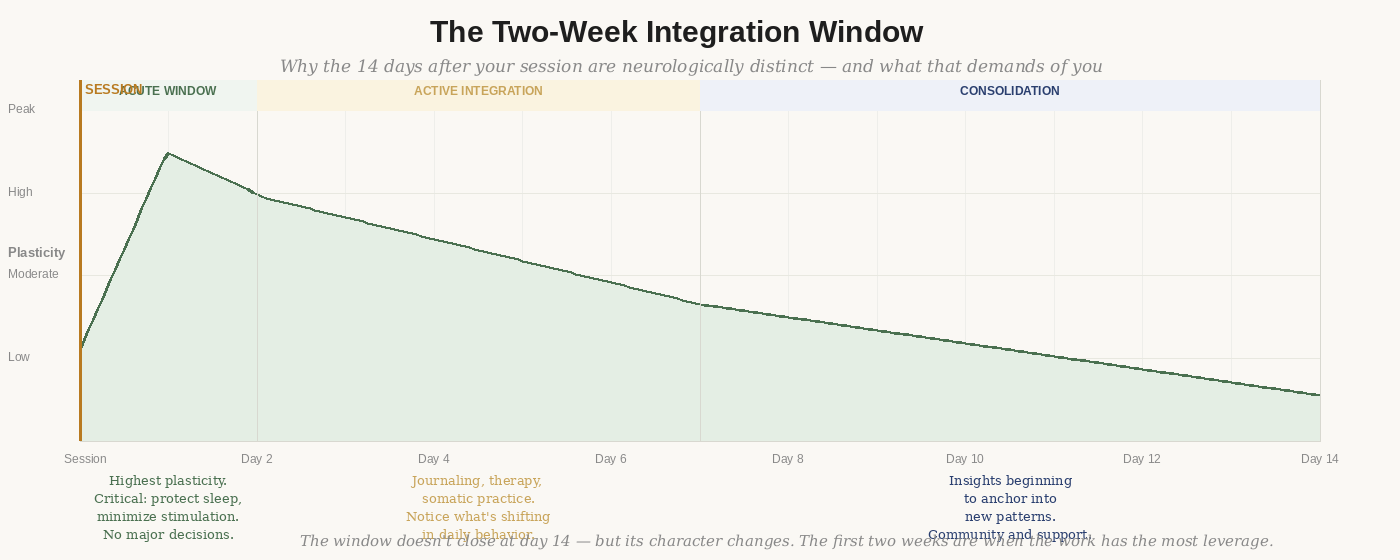
Figure 1: The integration window in detail. The first two days carry the highest plasticity; the window remains elevated through day 14.
What this means practically: the brain is more open to new patterns during this period. New habits are easier to establish. Old patterns are more visible and more workable. The material that surfaced during the session is more accessible — both to conscious reflection and to the kind of body-based processing that somatic practices support. This is the productive side of the window.
The demanding side: this elevated sensitivity also means that destabilizing influences have more impact than usual. Alcohol blunts the window significantly. High stress, poor sleep, and social conflict can push the material into overwhelm rather than integration. Returning immediately to a high-stimulus, high-demand environment — which most people feel social pressure to do — cuts the window short. Protecting the window means, to some degree, protecting your environment in the first two weeks.
The three phases of the window
Days 1–2 (Acute Window): The highest point of elevated plasticity, immediately following the session. Sleep during this period is particularly important — the brain consolidates the session's neurological changes during deep sleep. Minimal stimulation, gentle activity, time in nature if available. No alcohol, cannabis, or other substances. No major decisions or difficult conversations.
Days 3–7 (Active Integration): The window remains elevated but is somewhat more stable. This is the period when active integration practices — daily journaling, somatic grounding, therapy or coaching sessions — have the most leverage. The material from the session is still vivid and accessible. Whatever practices you establish in this phase tend to persist into the consolidation phase.
Days 8–14 (Consolidation): The window is still elevated above baseline but declining. Insights are beginning to anchor into behavioral changes — or not, depending on what active work has been done. This is often when people begin to notice whether the session has produced lasting change or whether the insights are beginning to fade back into old patterns.
The Spectrum of Post-Session States
One of the most important things this module can give you is a realistic picture of the range of experiences that are normal in the days after a session. The dominant cultural narrative — primarily composed of people who share their experiences publicly — skews toward the profound and positive. People who had difficult or confusing integration experiences are underrepresented. This creates a distorted baseline that makes many people feel that their integration experience is wrong when it is, in fact, entirely normal.
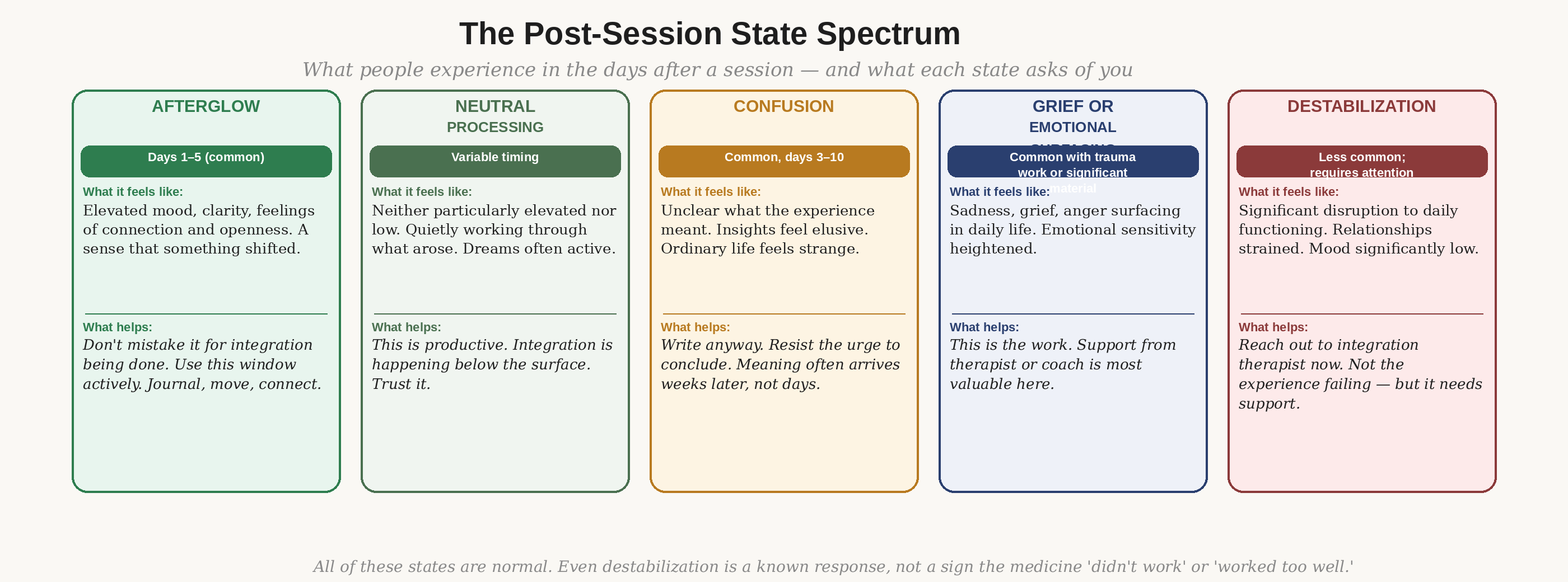
Figure 2: The full spectrum of post-session states. All of these are known integration responses — even destabilization does not mean the session failed.
Afterglow
The afterglow is the elevated mood, clarity, and sense of openness that many people experience in the days immediately after a session. Things feel more vivid. Connection with others feels easier. A sense of meaning or purpose is more present. This is a real neurological state — elevated serotonin activity and the temporary dissolution of habitual self-critical patterns create genuine relief.
The afterglow is valuable and worth using actively. The mistake is mistaking it for the integration being complete. The insights that feel obvious in the afterglow may feel less obvious in two weeks. The changes that feel inevitable may require deliberate work to establish. Use the afterglow to begin practices — journaling, somatic work, reaching out for integration support — that will continue when the glow has faded.
Neutral processing
Many people experience a period of relatively neutral functioning — neither particularly elevated nor low, but with a sense of quiet internal activity. Dreams are often vivid and thematically rich. Small things feel slightly more meaningful than usual. This is productive integration happening below the surface of conscious awareness.
The neutral processing state is easy to undervalue because it doesn't feel dramatic. Nothing seems to be happening. In fact, significant consolidation may be occurring. The instruction here is simple: maintain the practices (journaling, grounding, somatic work), trust the process, and resist the urge to force meaning or conclusion before it arrives.
Confusion
Confusion is among the most common and least discussed post-session states. The experience was significant — you sense that — but you don't know what it meant. The insights that felt clear during the session are harder to access now. You feel slightly outside ordinary life, as if the experience has changed your relationship to your usual frame without yet providing a new one.
Confusion is not a sign of failure. It is often a sign that something genuinely new has been encountered — something that doesn't yet fit the existing cognitive structure. The instruction for confusion: write anyway, even when you don't know what to write. Meaning frequently arrives weeks after a session, not days. The journal entries you write in confusion often read very differently — and more clearly — six weeks later.
Grief and emotional surfacing
The medicine frequently surfaces material that has been held at a careful distance in ordinary life. Grief for what was lost, anger about what happened, sadness about what has not been possible. This surfacing is the therapeutic mechanism — material that was suppressed or managed becomes available to be processed. But the surfacing experience can feel like a worsening rather than an improvement, particularly when it is happening into ordinary life rather than in the supported container of the session.
Emotional surfacing during integration is not the session's material coming back — it is the session's material being integrated. The difference is direction: during the session, material arose. During integration, it is being processed and metabolized. This distinction matters because it changes the appropriate response. During the session, surrender and presence. During integration: journaling, somatic work, therapy, movement — active engagement with what is surfacing.
Destabilization
Destabilization — significant disruption to daily functioning, persistent low mood, relationship strain, difficulty working — is less common than the other states but is real and deserves honest attention. It can occur when the session surfaced material that the person's current support system and coping resources are insufficient to hold.
When to seek additional support:
Seek immediate support if you experience: persistent inability to function at work or in relationships for more than 3–4 days; thoughts of self-harm or suicidal ideation; significant psychotic symptoms (beliefs disconnected from reality that persist beyond the first 24 hours); or inability to sleep for more than two nights consecutively.
This is not the session failing. It is the session surfacing material that needs more support than the integration period alone can provide. Reach out to your integration therapist, your retreat center, or if it is a crisis — the 988 Lifeline (call or text).
Destabilization is a known integration response with known solutions. You are not broken and the experience did not break you.
What Integration Actually Means
This module's central distinction: integration is not thinking about the experience. It is doing something differently because of the experience.
This sounds simple. It is not. The thinking about the experience is easy — the mind naturally gravitates toward the session material, replays images and insights, attempts to analyze and understand. This mental activity feels like integration because it is engaged with the material. It is not. It is rumination in the service of understanding, which is valuable but not sufficient.
Real integration is behavioral. It is the person who, because of what the session showed them about their relationship to anger, has one different conversation this week than they would have had before. It is the person who, because of what arose around their relationship to their body, begins a daily movement practice. It is the person who, because they saw their avoidance pattern clearly for the first time, calls the friend they've been avoiding.
The Three Questions practice below is specifically designed to keep integration behavioral rather than merely cognitive. Question 3 — "What is this asking of me today?" — always points toward action. Not understanding. Action. Small, concrete, today.
The Integration Paradox — Who to Talk To
One of the least intuitive integration guidelines: protect the experience from too much verbal processing too soon, with people who don't understand the space. This feels counterintuitive because talking about significant experiences is how people normally process them. With psychedelic integration, early and indiscriminate sharing has a specific downside: other people's frameworks and reactions become part of how you understand what happened, before you've had the chance to develop your own relationship with the material.
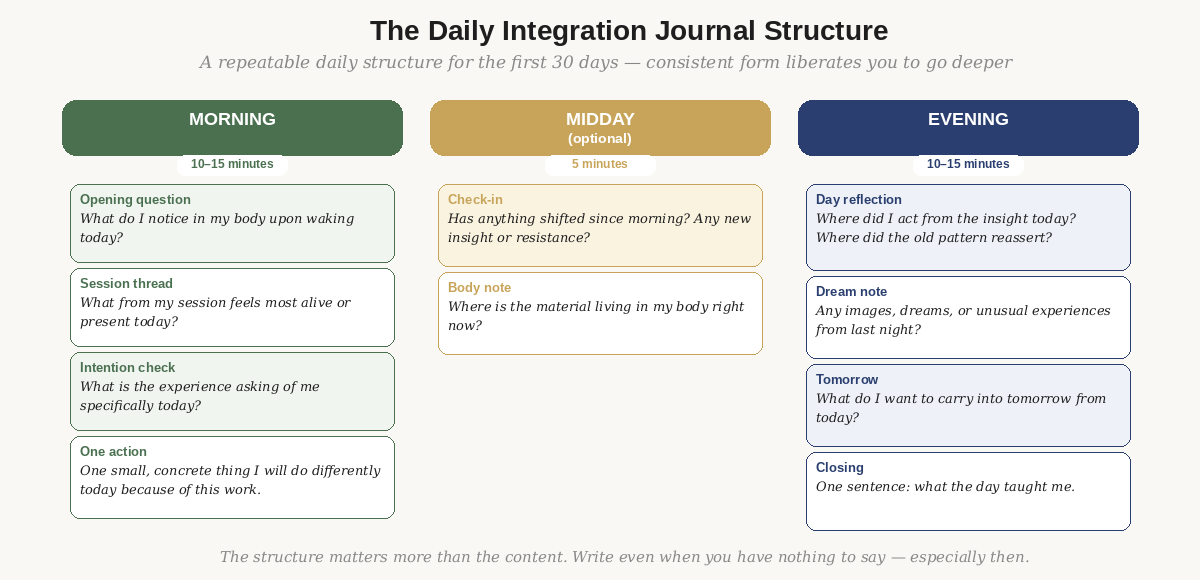
Figure 3: The daily journaling structure — morning, midday, and evening sections. The morning section is the most important.
A family member who is skeptical of psychedelics will inadvertently insert their skepticism into your still-forming understanding of what happened. A friend who had a profound experience will overlay their narrative onto yours. A colleague who doesn't know you've done this will require you to explain and justify in ways that pull you toward the most defensible version of the experience rather than the most honest one.
This doesn't mean silence. It means selectivity. The integration therapist or coach — whose job is to hold your experience without imposing a frame — is the most valuable early contact. The retreat's alumni network, who share a common frame of reference without imposing a specific narrative, is the second most valuable. Trusted people who genuinely understand this space, without an agenda for how your experience should be understood, third. The rest: later, when the material is more settled.
The specific risk with partners and close family
Partners and close family occupy a particular position in integration. They will notice that you're different — often before you've found language for what has changed. Their response to that difference — whether curious, supportive, anxious, or threatened — will land in a nervous system that is more open than usual. Their fear can amplify your uncertainty. Their excitement can short-circuit your own slower process of meaning-making.
The guidance for this first two weeks: be honest that something significant happened without providing a full account. "I'm processing something important" is a complete and honest sentence. Full disclosure — what you saw, what it meant, what you're going to do differently — belongs in Module 10, after the integration has had more time to settle. Module 10 covers the relationship dimension of integration in full.
The Role of Sleep, Nature, and Reduced Stimulation
These three variables — sleep, nature, and reduced stimulation — are not wellness suggestions. They are specific integration requirements that have neurological bases.
Sleep
The brain consolidates the neurological changes produced by psychedelic sessions during deep sleep, specifically during the REM and slow-wave sleep phases. Research on memory consolidation consistently shows that sleep in the 24–48 hours after a significant learning or experience is particularly important for long-term retention of what was processed. The same mechanism applies to the neurological reorganization initiated by psychedelics.
Prioritize sleep above almost everything else in the first week. Seven to nine hours consistently. Reduced screen time before bed. No alcohol — which disrupts REM sleep even in small amounts. If sleep is disrupted, breathwork before bed can help: four counts in, eight counts out, for ten minutes, lying in bed.
Nature
Time in nature during integration is not incidental — it is functionally significant. The nervous system regulation that outdoor environments produce (reduced cortisol, activation of the parasympathetic system, grounding through natural sensory input) directly supports the integration process. Many people find that insights which are elusive in indoor environments arrive readily during a walk in natural surroundings.
Even small doses of nature matter: a park, a garden, a body of water, trees. Twenty to thirty minutes daily during the first two weeks produces measurable effects on the integration experience. This is not metaphorical.
Reduced stimulation
The elevated sensitivity of the integration window means that high-stimulation environments — crowded social situations, intense news consumption, conflict-heavy entertainment, alcohol-centered socializing — have more impact than usual and tend to work against the integration process. This doesn't require hermit-like withdrawal. It requires some deliberate choices about what you expose the nervous system to during the period when it is most plastic.
Specifically: reduce social media during the first week. Not because social media is inherently harmful, but because the comparison, anxiety, and fragmented attention it produces are directly counterproductive to the contemplative attention integration requires. Replace some of that time with walking, journaling, or sitting quietly.
The thing people most want to avoid in this module is structuring their time after the retreat.
Most people return from a retreat with full intention to maintain the integration practices, and within a week are back to their previous pace of life. The journaling falls off. The somatic practice disappears. The insights begin to fade. Six months later, the question is why the session "didn't stick."
The answer is almost always the same: integration was treated as an aspiration rather than a schedule. The practices worked when they were practiced. They were practiced when they were scheduled. They were not scheduled.
Before you leave for your retreat, put the following in your calendar: 15 minutes of journaling every morning for 30 days. A weekly session with your integration therapist or coach. Three days with reduced work demands immediately after your return. This is not optional — it is the integration.
The 30-Day Integration Journaling Template
Time required: 15 minutes daily, morning preferred.
Duration: 30 days minimum, beginning the morning after your session.
Materials: A dedicated journal — not your phone. Physical writing produces different cognitive processing than typing.
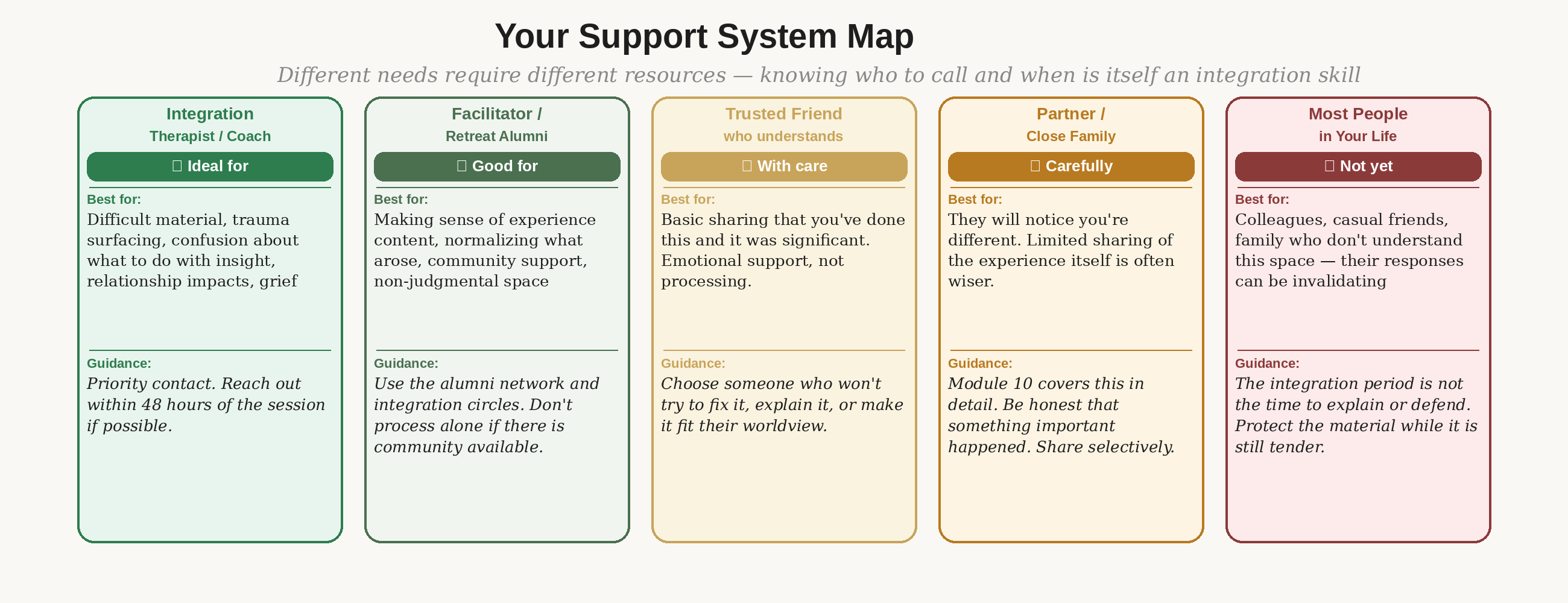
Figure 4: The integration paradox — who to share with and when. Protect the material while it is still tender.
The journaling template is structured in three daily sections. The morning section is mandatory — complete it before checking your phone or engaging with the demands of the day. The midday and evening sections are shorter and more flexible — use them when you can, skip them when life genuinely doesn't allow.
Morning section (10–15 minutes)
Complete these four prompts in order. Don't skip ahead. Don't read the previous day's entry before writing. Each day stands alone.
- Body check-in: Before thoughts, before interpretation — what do you notice in your body right now? Scan from feet to crown. Name what is there without trying to explain it.
- Session thread: What from your session feels most alive or present today? Not what you've been thinking about most — what carries the most charge, the most felt significance.
- Intention check: What is the experience asking of you today? Not as a general question — specifically today. One thing.
- One action: Based on what you've written — one small, concrete action you will take today. Write it as a commitment. "Today I will ___."
Evening section (5–10 minutes)
- Where did you act from the insight today? Be specific — a moment, a conversation, a choice.
- Where did the old pattern reassert? Name it without judgment — this is information, not failure.
- One sentence: what the day taught you about the work.
Weekly review (Sunday evenings, 20 minutes)
Once a week, read back through the week's entries. Then write:
- What themes keep appearing across the week?
- What action did I commit to this week that I actually did? What did I not do?
- What is shifting — even slowly — in how I move through my life?
- What does next week ask of me?
The weekly review is often when the most significant integration insights arrive — when the patterns across daily entries become visible as a pattern rather than individual days.
The Three Questions Practice
Time required: 5 minutes daily.
When: First thing upon waking. Before your phone. Before speaking.
Duration: 30 days minimum.
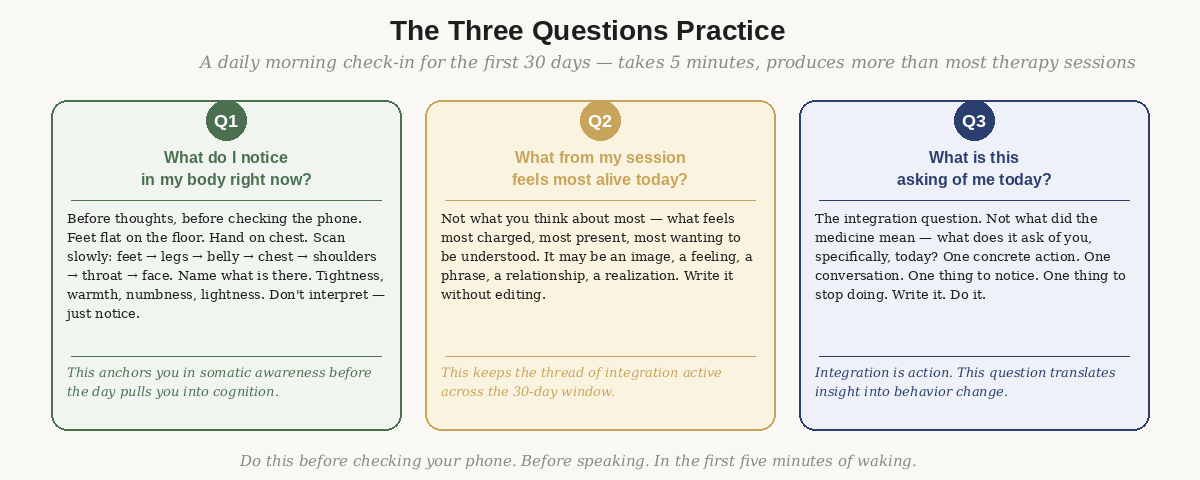
Figure 5: Three questions, five minutes, done before anything else in the morning.
The Three Questions practice is the condensed version of the journaling template — usable on days when a full journaling session isn't possible. It is also specifically designed for use before the analytical mind has fully activated in the morning, when somatic and intuitive access is higher.
Question 1: What do I notice in my body right now?
Before thoughts, before the day's demands — press your feet flat on the floor. Place one hand on your chest. Scan slowly from feet to crown. What is there? Tightness in the jaw, warmth in the chest, heaviness in the shoulders, lightness in the head. Name it internally. Spend sixty seconds on this. Write two to three words.
Question 2: What from my session feels most alive today?
Not what you've been analyzing or thinking about — what carries the most charge right now, in this moment, as you sit with this question. It may be an image, a feeling state, a phrase, a person, a realization. It may be different from yesterday's answer. Write it without editing.
Question 3: What is this asking of me today?
The integration question. What does the work — not in the abstract but specifically today — ask of you? One conversation, one practice, one thing to notice, one thing to stop doing. Write it as a concrete sentence. Then — and this is the part most people skip — do it.
The Three Questions take five minutes. They require a pen and paper, or a notes app if paper isn't available. They are among the most powerful integration practices available precisely because they are small, consistent, and behavioral rather than merely cognitive.
- Have you scheduled 15 minutes of journaling every morning for 30 days in your calendar — as a recurring appointment, not an intention?
- Do you have a dedicated journal (not your phone) ready?
- Have you identified your integration therapist or coach, and scheduled at least one session in the first week after your retreat?
- Do you have at least 3 days of reduced work demands scheduled immediately after your retreat?
- Have you thought about what reduced stimulation looks like for you specifically — not as a general principle but as specific choices about social media, socializing, and work demands?
Resources
Books
The Body Keeps the Score — Bessel van der Kolk. Chapters 15–17 on treatment approaches are directly relevant to why somatic practices during integration matter.
Spontaneous Healing — Andrew Weil. Less obviously relevant but contains useful material on the role of sleep, nature, and reduced stimulation in healing processes — the biological foundation of the integration window requirements.
Research
Tagliazucchi, E. et al. (2016). Increased global functional connectivity correlates with LSD-induced ego dissolution. Current Biology. The neuroimaging evidence for post-session changes in brain connectivity that persist beyond the acute experience.
Carhart-Harris, R. et al. (2021). Trial of Psilocybin versus Escitalopram for Depression. New England Journal of Medicine. Follow-up data showing the integration period as the period in which therapeutic effects consolidate or fail to consolidate.
Support resources
Fireside Project (firesideproject.org) — Psychedelic peer support line available 24/7. Call or text 62-FIRESIDE. For difficult integration experiences that need immediate support.
Nectara (nectara.com) — Integration coaching specifically designed for post-retreat periods. Partners with multiple retreat centers. One of the most structured integration support platforms available.