Why integration matters more than the experience itself
Research and clinical practitioners consistently find that the psychedelic experience alone does not produce lasting change — the integration period does. The experience opens a window; integration determines what you do with what you see through it.
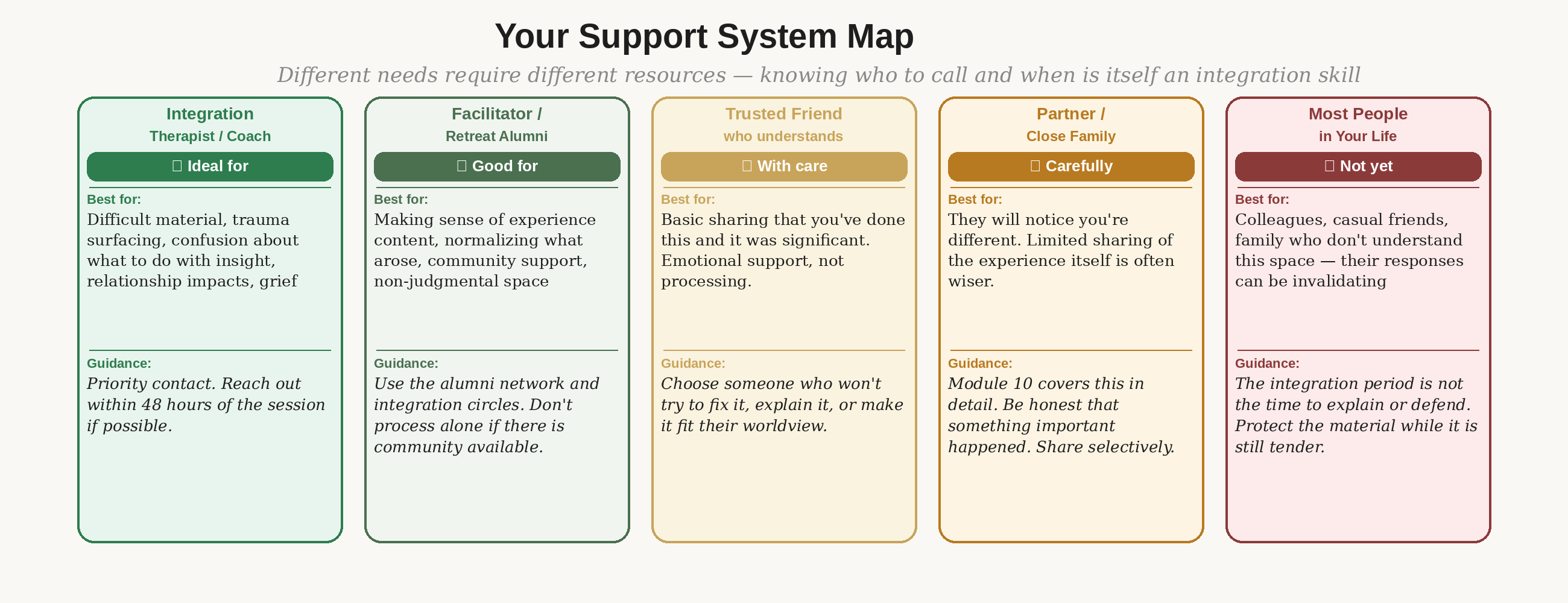
Who to reach out to and when — integration therapist, coach, retreat alumni, trusted friends. Different needs require different support. Click to enlarge.
The weeks following a psychedelic experience are characterized by an unusual openness — a kind of neuroplastic window during which habitual patterns are more flexible, insights are accessible, and change is more possible than usual. Without deliberate integration work, this window closes and daily life reasserts its previous patterns. With support, it can be one of the most productive periods of personal growth a person goes through.
Difficult material often surfaces during psychedelic experiences — old trauma, suppressed emotions, patterns that have been invisible. Without professional support, this material can remain unresolved, occasionally making things harder before making them better. An integration therapist or coach knows how to work with this material without pathologizing the experience that brought it up.
Research from Soltara and other retreat programs found that participants who engaged in structured integration programs reported a significant increase in their ability to maintain psychological and emotional gains achieved during ceremony. The ceremony does the opening; integration does the building.
Integration coaches vs. licensed therapists — what's the difference
This distinction matters practically, legally, and clinically. Neither is universally better — they serve different needs, and in many cases the ideal support involves both.
Good fit for: people who are psychologically stable and need help translating experience into action. Typically more affordable than therapy.
Good fit for: people with complex trauma histories, active mental health diagnoses, difficult or overwhelming experiences, or material that requires clinical depth. May be partially covered by insurance.
Vetted integration directories
The directories below have vetting processes, not just open listings. Quality varies even within them — the questions in the next section will help you evaluate any individual practitioner.
MAPS Therapist Directory MDMA-trained
Maintains a list of therapists trained in MAPS MDMA-assisted therapy protocols. The most rigorous clinical training in the field. Good for people who have done or are planning MDMA therapy specifically, or who need clinically trained integration support.
maps.org/about/directory ↗Integration Directory (ZENDO) Harm reduction
MAPS Zendo Project maintains a list of psychedelic peer support and integration specialists. Particularly strong for difficult experience integration and harm reduction focused work. Volunteers and professionals both listed.
zendoproject.org ↗Nectara Plant medicine integration
Specializes in ayahuasca and plant medicine integration. Partners with several major retreat centers including Soltara. Online platform with both coaches and therapists. Good for people returning from retreat programs who want continued support.
nectara.com ↗Psychedelic Support Broad directory
One of the largest psychedelic integration practitioner directories. Includes licensed therapists, coaches, and guides across all medicine types. Search by location, specialty, insurance acceptance, and experience type. Free to search.
psychedelic.support ↗Fluence Directory Clinician-trained
Fluence trains mental health professionals in psychedelic-assisted therapy and integration. Their directory lists graduates who have completed clinical training programs. Higher clinical depth than many directories — good for complex presentations.
fluencetraining.com/find-a-therapist ↗Chacruna Institute Practitioner List Ayahuasca specialist
The Chacruna Institute focuses specifically on plant medicines and traditional practices. Their practitioner network has expertise in ayahuasca, ibogaine, and other plant medicine integration specifically — not just general psychedelics.
chacruna.net ↗The Coaching For Healers Network Coaches
Integration coaches specifically, not therapists. Sliding scale pricing common. Good for people who don't need clinical depth but want skilled support making meaning from their experience and anchoring changes in daily life.
Therapist Uncensored directory ↗What to look for in an integration coach or therapist
Not all practitioners listed in directories are equally skilled. These are the markers that distinguish genuinely skilled integration support from well-meaning but undertrained practitioners.
Questions to ask before booking
Most practitioners offer a free 15–30 minute intro call. Use it. These questions will tell you quickly whether someone has genuine depth in this work or is a general practitioner who has added psychedelic integration to their offering.
Cost of integration support
| Type of support | Typical cost per session | Insurance | Notes |
|---|---|---|---|
| Integration coach (non-licensed) | $80–$175 | Not covered | Sliding scale often available. Some coaches offer packages (6–10 sessions) at reduced per-session rates. |
| Licensed therapist with integration training | $150–$300 | May be partially covered | Insurance covers the therapy portion but not specifically psychedelic integration. Out-of-network reimbursement varies. |
| MAPS-trained MDMA therapist | $200–$400 | Rarely covered currently | Premium cost reflects specialized clinical training. Worth it for complex PTSD presentations. |
| Retreat-affiliated integration (e.g. Nectara) | $75–$150 | Not covered | Often already built into premium retreat programs. Standalone sessions also available. |
| Peer support / integration circles | Free–$30 | N/A | MAPS Zendo, local psychedelic societies, and online communities. Good supplement to professional support, not a replacement. |
Sliding scale is common in this field — many practitioners are deeply committed to accessibility and will work with people who genuinely cannot afford full rate. Ask directly. The worst outcome is a no, and many practitioners reserve slots at reduced rates specifically for this.
For veterans specifically, Heroic Hearts Project and VETS Inc. both provide integration coaching as part of their grant programs. If you've received a grant for a retreat, integration coaching is included — you don't need to source it separately.
Self-guided integration tools
Professional support is ideal, but not everyone can access it immediately. These practices provide structure for self-directed integration while you find the right practitioner or between sessions.
Core self-integration practices
Daily journaling for 30 days minimum. Write for at least 15 minutes every morning — not just about the experience itself, but about what's showing up differently in your daily life as a result. What do you notice? What feels different? What are you being called to do or change?
The integration question practice. Each evening, ask yourself three questions: What did I notice today that connects to my experience? What do I want to carry forward from what arose? What do I want to let go of? Write the answers without editing.
Somatic grounding. Intense psychedelic experiences leave residue in the body, not just the mind. Daily physical practices — yoga, swimming, walking in nature, breathwork — help metabolize this. Don't spend all your integration time in the head. Get into the body.
Community.) Online spaces like Reddit's r/Psychedelics and r/PsychedelicTherapy, local integration circles (many cities have these through psychedelic societies or harm reduction organizations), and your retreat's alumni community all provide context and reduce isolation in the integration process.