Relationships and Integration
- Understand why integration inevitably affects your relationships — not as a side effect to be managed but as a primary dimension of the work.
- Have a framework for who to tell, what to share, and when — including specific guidance for partners, close family, and people outside the psychedelic-literate world.
- Know the full spectrum of partner reactions and have specific, practical responses for each — including the most difficult ones.
- Understand the isolation risk in the integration period and have a concrete plan for avoiding it while still protecting the material.
- Have completed the "Relationships I Want to Tend" reflection and the structured partner conversation guide.
Opening
The session happened in a contained space — a retreat center, a clinical room, a ceremony held by a facilitator. You return to a life that was not in that room. People who love you, who depend on you, who have expectations of you — people who knew you before and will now encounter a version of you that has been through something they didn't share. How that encounter goes is not incidental to integration. It is, in many ways, where integration becomes real.
Personal growth that exists only in the space between you and your journal is not integration. Integration is what happens when the changes that the session initiated meet the friction of ordinary life — including the friction of other people's needs, expectations, fears, and responses to your change. The relationship dimension of integration is where the work gets tested and where, if you navigate it well, it gets consolidated.
This is also where people most commonly get stuck. The session may have surfaced important insights about a primary relationship — about patterns of communication, about unmet needs, about the ways two people have been avoiding something for years. Bringing that awareness into the relationship requires a kind of courage and skill that most preparation courses don't address. This module does.
A note before we begin: this module covers the most common relational situations — partners and close family — with enough specificity to be useful. It does not attempt to cover every possible relationship configuration or relational complexity. If your relationship situation involves significant conflict, legal complexity, or conditions that require professional mediation, the exercises in this module are a starting point, not a substitute for that support.
How Integration Changes Your Relationships
The systems theory concept of homeostasis applies directly to relationship dynamics: any system — including a relationship system — tends to maintain equilibrium. When one person in a relationship changes significantly, the system is disrupted. The other person — whether they know what happened or not — will respond to the disruption with some version of either accommodation (adjusting to the change) or resistance (attempting to return to the previous equilibrium).
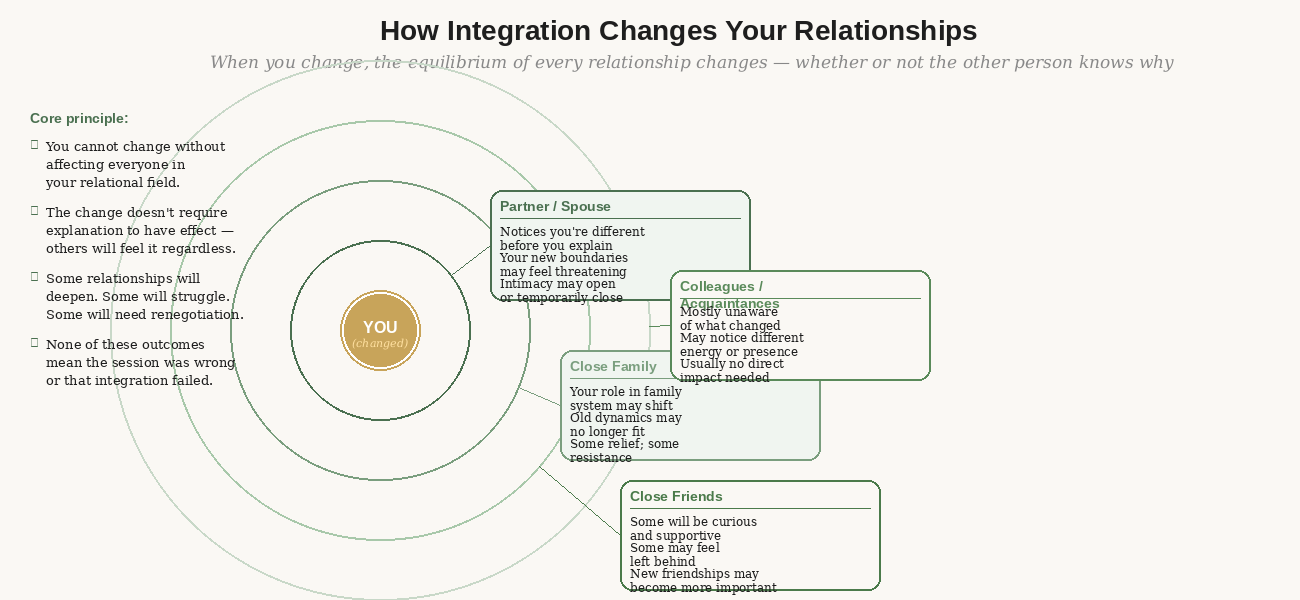
Figure 1: Change in one person creates waves through every relational ring. The closer the relationship, the more directly the change is felt.
This means that you cannot integrate privately. Even if you tell no one what happened, the changes the session initiated will be visible — in how you communicate, in what you're willing to tolerate, in how you occupy your body, in the quality of your presence. People who know you well will notice before you've found language for what has changed. Their response to the noticing — whether curious, anxious, relieved, or threatened — will shape the relational texture of your integration period.
The three most common relationship disruptions
Boundary recalibration is among the most frequent integration-related relationship shifts. The session may have clarified what you are and are not willing to participate in — patterns of interaction, dynamics of caretaking, habitual forms of conflict or avoidance. Boundaries that were previously unclear or unenforced may become clearer. For people accustomed to the previous version of those boundaries, this can feel abrupt or destabilizing.
Changes in relational needs often accompany significant sessions. What felt necessary before — constant connection, specific forms of validation, particular patterns of intimacy — may feel less essential. Or the opposite: things that seemed optional before — depth, honesty, genuine presence — may become more important. Either direction of change creates adjustment for the people in your relational field.
Value clarification is the third common disruption. The session may have brought into clear relief what you actually value — in work, in relationships, in how you spend time — as distinct from what you had been pursuing out of habit or social expectation. When values shift, priorities shift. When priorities shift, how you allocate time and energy shifts. This affects everyone who has expectations of your time and energy.
Who to Tell, What to Say, and When
Module 7 introduced the integration paradox — the counterintuitive guidance to protect the material from too much verbal processing too soon. This module applies that guidance specifically to relationships. The timing and framing of disclosure is not a minor tactical consideration; it is a meaningful determinant of how relationships navigate the integration period.
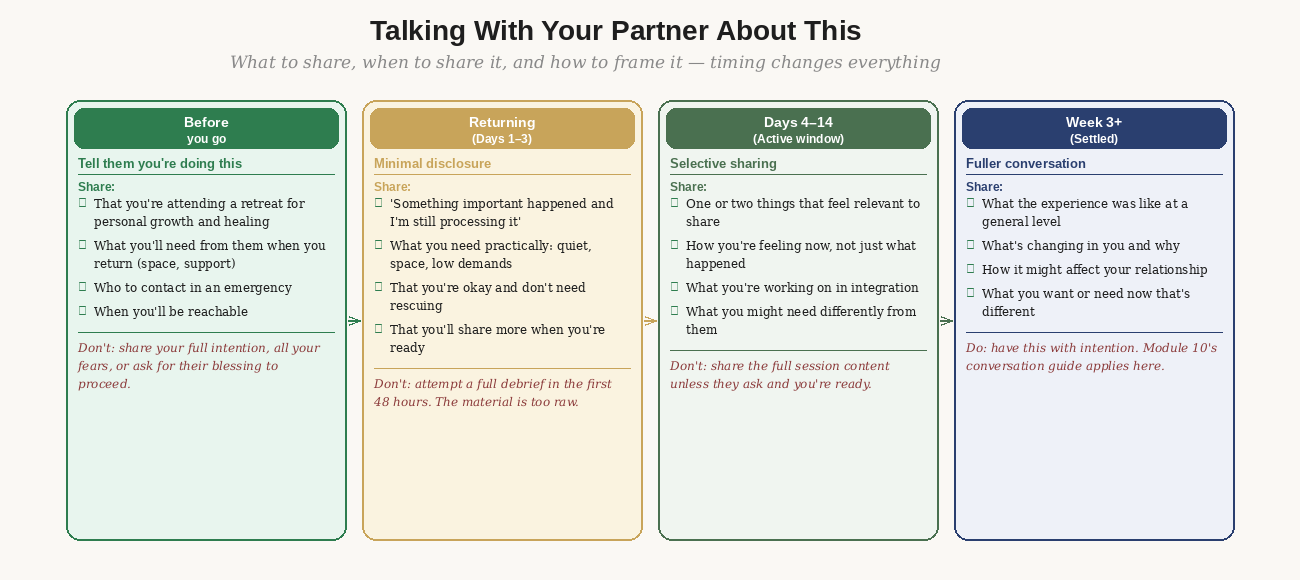
Figure 2: What to share with a partner at each phase — from before you leave through the third week of integration.
Before you leave
Your partner or close family should know, before you go, that you are doing this. Not because they need to approve — it is your decision — but because the people who are responsible for your wellbeing need to know where you are and what you're doing. This conversation should cover: that you're attending a retreat or session for personal growth and healing; what you'll need from them when you return (space, reduced demands, the freedom to process); who to contact in an emergency; and when you'll be reachable.
What this conversation should not cover: your full intention, your fears about what might arise, a detailed explanation of psychedelic therapy, or a request for their blessing to proceed. You have made this decision. The pre-departure conversation is informational, not permission-seeking.
Returning — Days 1 through 3
The first 48 hours after returning are not the time for a full debrief. The material is still raw. Your nervous system is still elevated. Anything you share in this window will be shared from inside the experience rather than from a more stable perspective, and the people receiving it will be responding to something that hasn't yet had time to settle in you.
What is appropriate in this window: telling your partner that something important happened and you're still processing it. Communicating what you need practically — space, quiet, low demands. Reassuring them that you're okay and don't need rescuing. And telling them you'll share more when you're ready. This is honest, informative, and protects both the material and the relationship from premature processing.
Days 4 through 14 — selective sharing
As the integration window progresses and the material settles somewhat, selective sharing becomes appropriate. One or two things that feel relevant to the relationship. How you're feeling now — not a session report, but your current emotional state. What you're working on in the integration period. And, importantly, what you might need differently from them — not as a demand but as honest communication about what you're discovering.
Week 3 and beyond — fuller conversation
By the third week, you have more perspective on the material and more stable ground from which to share it. This is when the fuller conversation becomes possible — what the experience was like at a general level, what's changing in you and why, how it might affect the relationship, and what you want or need that's different now. The conversation guide exercise at the end of this module is designed for this timing.
Partner Reactions — A Realistic Spectrum
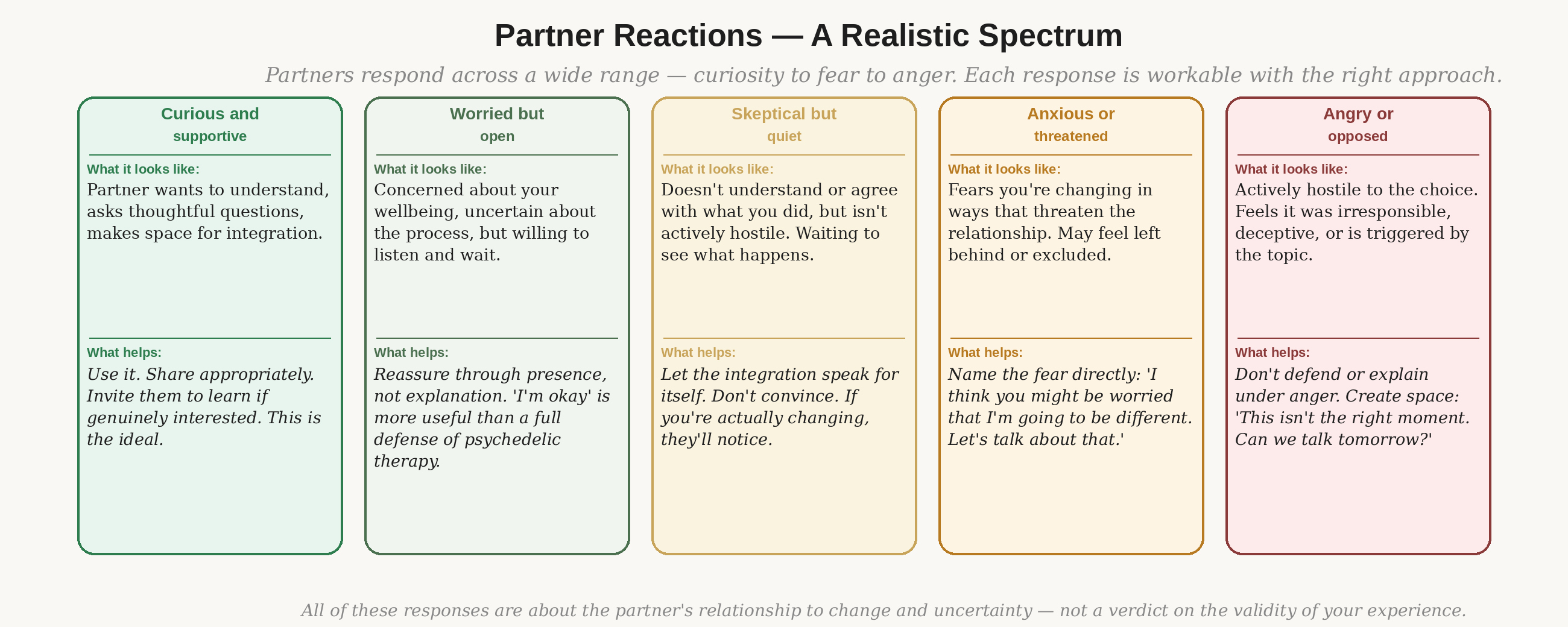
Figure 3: Partner reactions span a wide range. All of them are about the partner's relationship to change and uncertainty — not a verdict on your experience.
No two partners respond identically to the return of someone who has been through a significant psychedelic experience. The response will be shaped by their relationship to altered states (fearful, curious, skeptical), their relationship to change in you specifically (is change generally welcome or threatening in this relationship?), what they've noticed while you were away and since you returned, and what they're afraid of.
Curious and supportive
The ideal response — and less uncommon than people fear. Partners who are themselves curious about consciousness, healing, or personal development, or who have seen you struggling with something the retreat was meant to address, are often genuinely pleased by the change they observe. The appropriate response is to use this. Share appropriately. Answer honest questions honestly. Don't give a dissertation, but don't deflect genuine interest.
Worried but open
Concern without hostility is the most common response. Your partner loves you, doesn't fully understand what happened, is uncertain about whether you're okay, but is willing to listen and wait. The instinct to immediately provide a thorough explanation is counterproductive here — what a worried but open partner needs first is evidence that you're present and okay, not a defense of psychedelic therapy. "I'm here. I'm okay. Something important happened. I'll tell you more when I've had time to settle" is more useful than any explanation you can offer in the first 48 hours.
Skeptical but quiet
Some partners genuinely disagree with the choice to do this and will remain skeptical regardless of what you say. The integration is wasted on them if you spend it trying to convince them of the validity of psychedelic therapy. What actually shifts skeptical but quiet partners, over time, is observable change in you — different behavior, different quality of presence, different patterns of relating. The integration speaks for itself; you don't need to narrate it.
Anxious or threatened
When a partner feels threatened by your change, the fear is almost always some version of: "You're going to become someone different from who I fell in love with, and I don't know if there's room for me in that new version." This is a legitimate fear, and dismissing it as unfounded is unlikely to help. What helps: naming the fear directly, on their behalf. "I wonder if you're worried that I'm going to be different in ways that affect us." That act of naming — showing that you can see their fear without being destabilized by it — tends to create more space than reassurance does.
Angry or actively opposed
Active hostility — either to the choice itself or to the changes it has produced — is the most difficult response to navigate and the one that most often requires support beyond this course. The primary guidance: don't defend or explain under anger. Anger responds to anger or capitulation; neither serves the relationship. Create space: "This isn't the right moment for this conversation. Can we come back to it tomorrow?" Then come back to it when both of you are more regulated.
Intimacy After Integration
This is a dimension of the partner relationship that is almost never addressed in integration guidance, and its absence creates confusion. Psychededlic sessions frequently affect intimacy — sometimes dramatically. Two distinct patterns are common.
Intimacy opening: the session may have reduced the defensive patterns, dissociation from the body, or relational guardedness that had previously limited emotional and physical intimacy. Partners report that the person who returned was more present, more open, more genuinely available than they had been in years. This is welcome, but it can also be disorienting — particularly if the relationship had developed stable patterns around a more guarded version of the person.
Intimacy temporarily closing: the session may have surfaced material — body memories, relational wounds, the need for more protected space — that makes ordinary intimacy feel like too much contact during the integration period. The elevated sensitivity of the post-session state means that intimacy feels more intense than usual, and that can be genuinely difficult to navigate.
Both responses are normal. Both deserve honest communication with your partner. The conversation is not: "Here is my explanation for why I'm different." It is: "I'm noticing [specific change] and I want to be honest with you about it. Can we talk about what this means for us?"
The Isolation Risk
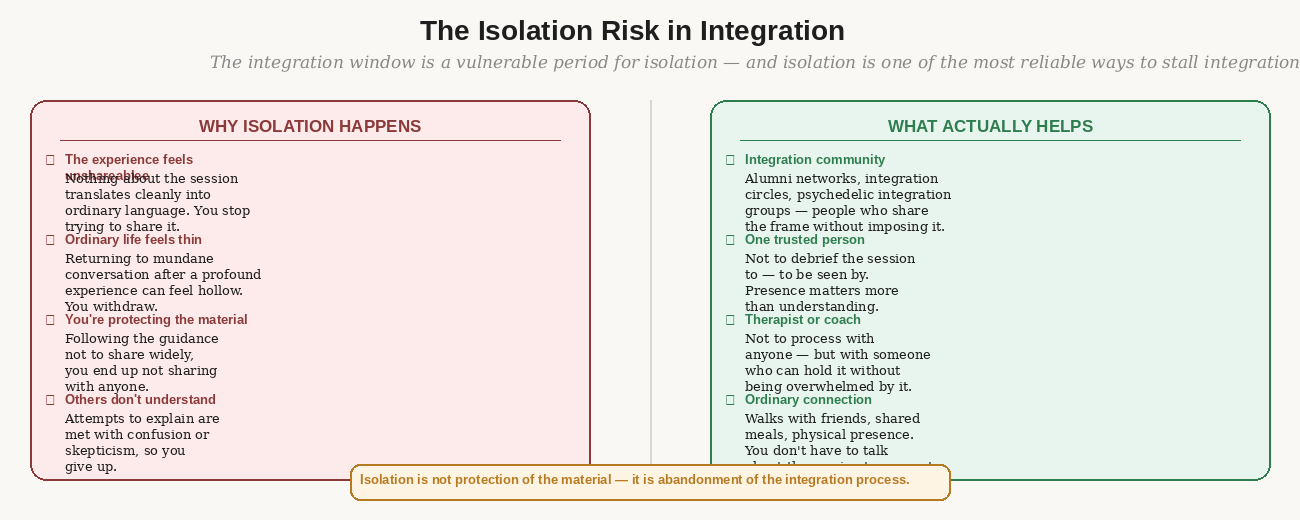
Figure 4: Why isolation happens during integration — and what actually helps. Isolation is not protection of the material.
The integration period creates specific conditions for isolation. The guidance not to share the material too widely is sound — but it can be misapplied as a reason to share with no one. The material feels unshareable — nothing about the session translates cleanly into ordinary language, and attempts to explain are often met with responses that feel inadequate or invalidating. Ordinary social interaction can feel thin against the backdrop of what the session produced. The result is a withdrawal that, over days and weeks, becomes isolation.
Isolation is not protection of the integration material. It is abandonment of the integration process. The research on psychological wellbeing is unambiguous: social connection is one of the most robust predictors of both mental health and the consolidation of positive change. The integration window is not the time to withdraw from connection; it is the time to be more selective about the quality of connection.
What helps without requiring explanation
You do not need to talk about the session to have the connection the integration period requires. Walking alongside a friend without talking about anything important. Shared meals. Physical presence. Being witnessed in ordinary moments. These forms of connection regulate the nervous system and support integration without requiring the session material to be explained or defended.
What the integration period calls for is deliberate contact with people who make you feel safe, seen, and regulated — regardless of whether they understand what you've been through. The alumni network of your retreat provides the most contextually aligned community. An integration therapist or coach provides the held container for the more difficult material. One or two trusted friends provide the ordinary human presence that neither of those can.
When Relationships Need Their Own Repair Work
Sometimes what surfaces in a session is not only insight about oneself but clarity about what has gone wrong in a specific relationship — patterns of harm, unaddressed ruptures, accumulated resentments or absences. The session may have made visible, with unusual clarity, the gap between the relationship you have and the relationship you want or need.
This material requires careful handling. The integration period is not the time for major relationship decisions. Elevated neuroplasticity and heightened emotional sensitivity during the first weeks after a session mean that everything feels more urgent and more significant than it may prove to be in the longer arc. The guidance from every integration framework: make no major relationship decisions in the first month after a session.
This doesn't mean ignoring what arose. It means bringing it to therapy or coaching, journaling about it, letting it settle and clarify before acting. What is a clear and durable insight at month two is a more reliable basis for action than what felt urgently obvious in day three. The urgency is the plasticity window talking; the settled clarity is the integration.
The 30-day decision moratorium:
Make no major relationship decisions — separations, major commitments, confrontations about longstanding issues — in the first 30 days after a session. This is not because the insights aren't real. It is because the integration window amplifies emotional significance in ways that may or may not reflect the settled state you'll be in at 60 or 90 days.
Write the decision down. Describe what it would look like and why it feels important. Return to it at 30 days. If it still feels as clear and important then — act. If it has changed — that change is itself integration.
The thing people most avoid in this module is having the actual conversation.
Not the planning of it. Not the journaling about what needs to be said. The actual conversation, with the actual person, in real time — where what they say back is not within your control and may be difficult to receive.
Integration that stays inside the journal is not integration. Integration that lives only in individual therapy sessions is not integration. Integration that changes how you show up in your actual relationships — that is integration.
The session showed you something about your relationships. The question is whether you will bring that into contact with the actual people involved. That contact is uncomfortable. It is also how the insight becomes real.
The Relationships I Want to Tend
Time required: 30–45 minutes.
When: Days 7–14 of the integration period, when the material has had time to settle.
This exercise creates an explicit inventory of the relationships that the session has touched — either because they directly featured in the content that arose, or because the changes you're integrating will affect them. Its purpose is to make the relational dimension of integration concrete and intentional rather than allowing it to remain vague.
Part A — The inventory (15 minutes)
List every relationship that came up during the session or that you sense will be affected by your integration. Don't evaluate — just list. Include people who aren't in your current life if they featured in the session material.
For each person, write two sentences:
- What the session surfaced about this relationship — what became visible, what you understood differently, what you felt toward them.
- What, if anything, this relationship needs from you now — not what you need from it, but what it needs from you.
Part B — The prioritization (10 minutes)
Of the relationships on your list, identify:
- The relationship that most urgently needs tending — where something unaddressed has real costs to one or both people.
- The relationship that most needs nothing from you right now — where the best thing you can do is let it settle without intervention.
- The relationship where the most potential lives — where the integration might, if you let it, produce something genuinely better than what existed before.
Part C — The specific commitment (10 minutes)
For the highest-priority relationship from Part B: write one specific, time-bound action. Not "I will improve this relationship." Something like "I will contact [person] by [date] and say [specific thing]." If the action involves a conversation, use the conversation guide below to plan it.
The Partner Conversation Guide
When: Week 3 of integration or later — after the material has had time to settle.
Preparation time: 30 minutes to complete written preparation.
Conversation time: 60–90 minutes, unhurried.
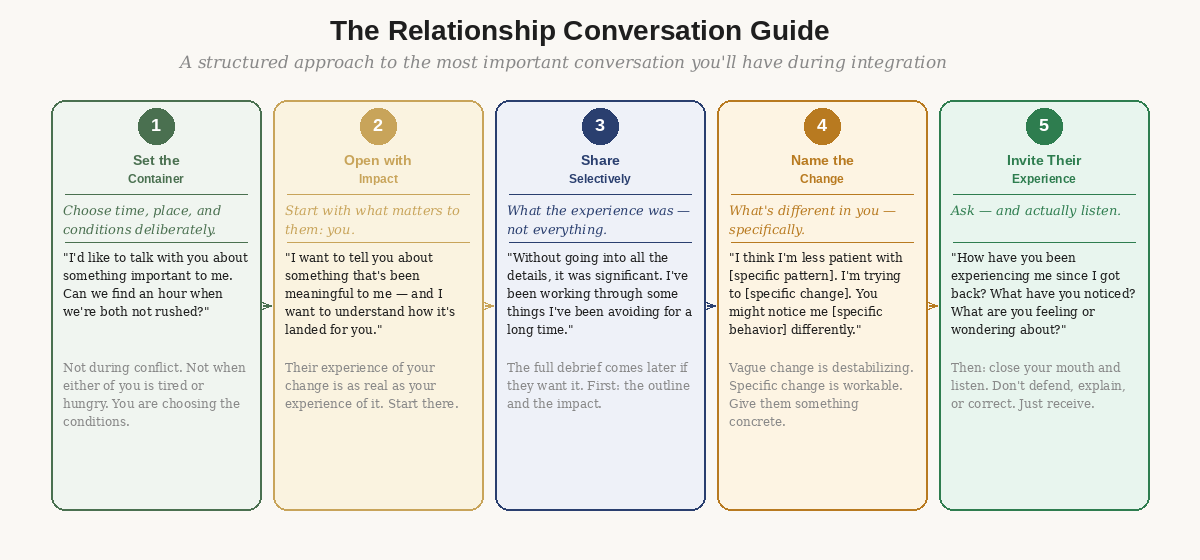
Figure 5: Five phases — from setting the container through genuinely inviting their experience. The conversation ends with their being heard.
This exercise prepares you for the most important conversation you'll have during the integration period — the full, honest conversation with a partner or close person about what happened and what it means for the relationship. It is structured to avoid the two most common failure modes: overwhelming them with too much too soon, and being so protective of the material that you share nothing meaningful.
Written preparation (do this before the conversation)
- What I want them to understand about what happened — in three sentences or less:
- What has changed in me that is most relevant to them and to our relationship:
- What I want or need differently from them now, that I may not have asked for clearly before:
- What I'm most afraid of in this conversation — and what I'm going to do with that fear:
- The question I most want to ask them, and my commitment to actually listen to the answer:
The five-phase conversation structure
Phase 1 — Set the container: Choose time and place deliberately. Not during conflict or when either of you is rushed. "I'd like to have an important conversation with you. Can we find an hour when we're not rushed?" Then be true to the container you've set — actually take the time, don't rush it.
Phase 2 — Open with their experience: Before sharing your experience, acknowledge that they've been experiencing you. "I know I've been different since I got back. I want to understand how that has been for you before I talk about my side." Then listen. Don't defend or explain yet.
Phase 3 — Share selectively: What the experience was like, without the full debrief. What it meant to you. What it's changing. Keep it to what's relevant to them and to the relationship — not the full internal journey.
Phase 4 — Name the change specifically: Not "I've changed." Something like: "I'm less willing to [specific pattern]. I'm trying to be more [specific quality]. You might notice me [specific behavior] differently." Specific change is workable; vague change is destabilizing.
Phase 5 — Invite their experience: "What is this bringing up for you? What are you feeling or wondering about?" Then close your mouth and receive what they say — without defending, explaining, or correcting. Just listen. The conversation doesn't end with your sharing. It ends with their being heard.
- Have you identified the two or three relationships most affected by your integration? Have you made a specific commitment about what each one needs from you?
- Have you had the pre-conversation with your partner or close person — not the full debrief, but honest communication that something important happened and you'll share more when you're ready?
- If you've been in isolation during the integration period — not talking to anyone about any of it — what specifically would you need to change this week?
- Have you applied the 30-day decision moratorium to any relationship decisions that arose from the session? Are you tracking them in writing?
- Is there a relationship on your inventory that needs professional support — a couples therapist, a mediator, something beyond what the exercises in this course can provide? If so, have you contacted them?
Resources
Books
Hold Me Tight — Sue Johnson. The most accessible guide to Emotionally Focused Therapy (EFT) — the attachment-based couples therapy that addresses exactly the relational disruptions integration often produces.
Nonviolent Communication — Marshall Rosenberg. The foundational text on needs-based communication — directly relevant to the partner conversation structure in this module.
The State of Affairs — Esther Perel. Though focused on infidelity, it contains the most sophisticated available treatment of how change in one partner disrupts relational equilibrium — directly applicable to integration-related relational shifts.
Support
Psychology Today Therapist Finder (psychologytoday.com/us/therapists) — includes filters for "Psychedelic Integration" and "Couples Therapy" — useful for finding therapists who can support both dimensions.
Gottman Institute (gottman.com) — evidence-based couples therapy resources and therapist directory. The Gottman Method addresses communication patterns directly relevant to the partner conversation exercises in this module.