Building Your Integration Practice
The Final Module
- Have synthesized everything from all twelve modules into a single, personalised integration protocol — a living document you will return to across the year.
- Understand the role of creativity in integration — how making something from what you've learned consolidates it differently than reflecting on it.
- Have mapped your full support system — who to call and when, across the range of situations integration produces.
- Understand integration as an ongoing orientation rather than a phase that ends — the final frame that the whole course has been building toward.
- Have completed the Personal Integration Protocol exercise and written the letter to your future self.
Opening
This is the last module. Which means it carries an unusual responsibility: it has to be both a conclusion and a beginning. A conclusion, because it synthesises what eleven modules have built. A beginning, because the integration work you've done here is not ending — it is becoming the orientation from which you'll meet everything that follows.
If you have worked through this course sequentially, you have spent significant time and attention on: understanding what you're getting into honestly, setting an intention that actually points toward something real, preparing your body and emotional system with clinical specificity, choosing and evaluating your setting carefully, navigating the session with the tools to meet difficulty rather than fight it, and building the practices, relationships, and structures that turn experience into lasting change. That is not a small thing. Most people who have psychedelic experiences don't do any of this.
This final module asks you to do something different from anything the previous eleven have asked. Instead of learning frameworks and doing structured exercises, it asks you to draw everything together into a document that is entirely yours — not a template or a generic protocol, but a specific map of your practice, your support system, your commitments, and your intentions. This document becomes the reference point you return to when the integration gets hard, when regression arrives, when the second valley feels permanent, when you're not sure what to do next.
The last exercise in this module is a letter. Not to anyone else — to yourself, to be read in six months. It is perhaps the most important thing this course asks you to write. It carries your current clarity forward to a time when that clarity may have faded, and it reminds you of who you were at this moment and what you knew then. Do it carefully. It will matter.
What This Course Has Built
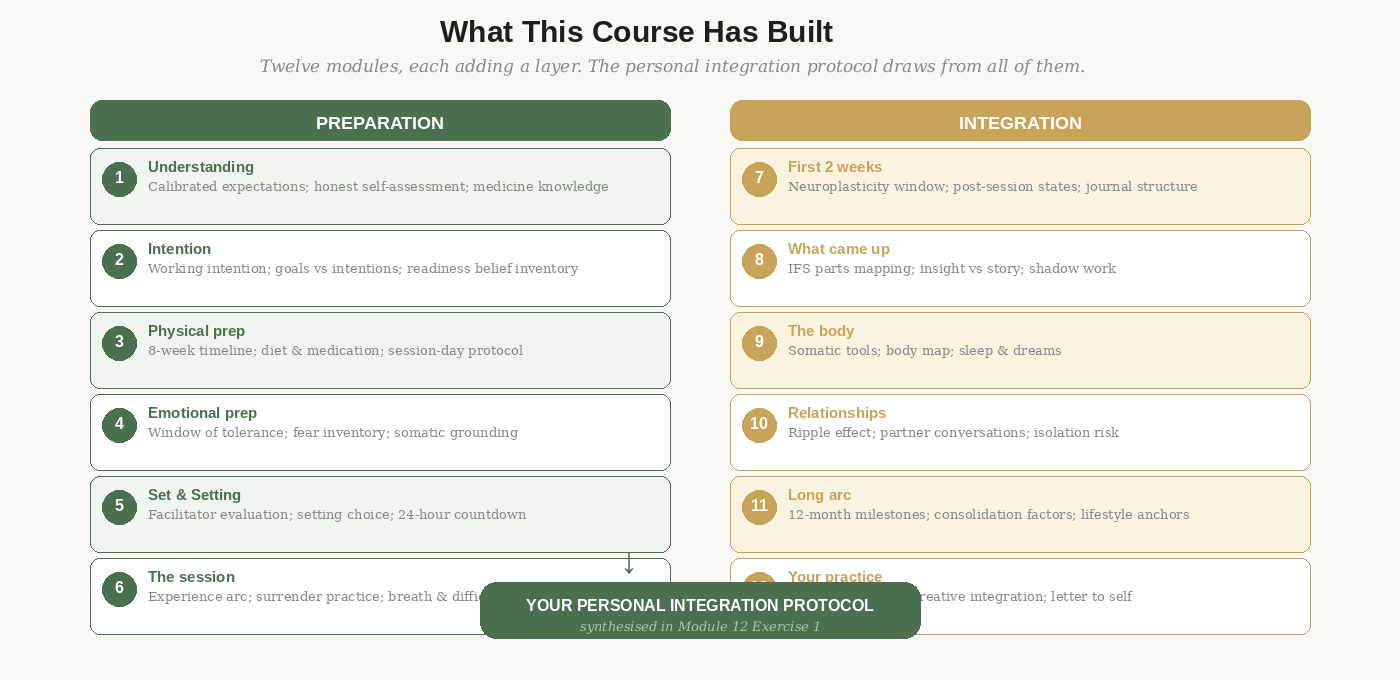
Figure 1: Twelve modules, each adding a layer. The personal integration protocol draws from all of them.
Twelve modules. Fifty-plus illustrations. Dozens of exercises. A course that began with calibrating your understanding of what you're getting into and ends with a document that is the distillation of everything you've built. Let's take one moment to name what that is.
The preparation sequence gave you a clinical-grade approach to one of the most demanding personal growth processes available — not as a spiritual consumer choosing an experience, but as an informed participant who understands the pharmacology, the psychological principles, the facilitation factors, and the personal readiness dimensions that determine whether this works or doesn't. That knowledge is yours now, permanently. It applies to every future session you may have, and it changes how you understand your own psychology whether or not you ever have another one.
The integration sequence gave you something rarer: a structured, evidence-informed approach to the most important and least supported phase of the process. The practices in Modules 7 through 11 — journaling, body mapping, parts mapping, the inquiry practice, the relationship conversations, the monthly review, the lifestyle anchor system — are not psychedelic-specific. They are effective psychological integration tools that work because they address how the human system actually changes, not because they are spiritually oriented.
What you do with all of that is now yours to determine.
The Role of Creativity in Integration
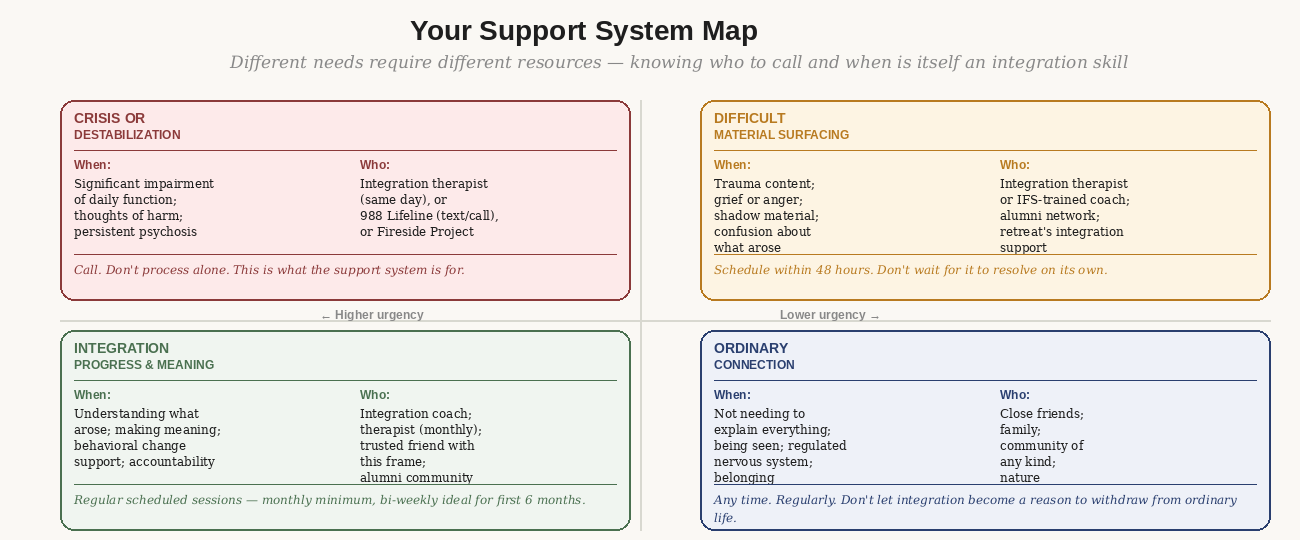
Figure 2: Four quadrants by urgency and need type — from crisis through ordinary connection.
Every other module in this course has emphasized practices that are primarily receptive or reflective: journaling, body scanning, inquiry, review. This section introduces something different: making. Externalizing the integration material into a form that exists outside of you — a piece of writing, a drawing, a piece of music, something built — changes how it is held and processed.
The mechanism is not mysterious. When you make something from integration material, you are required to organize it — to choose what to include and what to leave out, to give it a form, to work with it as material rather than as content inside your own head. This organizing function produces a kind of consolidation that purely internal reflection doesn't. The made thing becomes an artifact of the integration — something you can return to, share, build on, or simply know exists.
The no-skill principle
The most common reason people don't engage with creative integration is the belief that they need to be skilled at the form. This is backwards. The creative integration practice is not about producing work that is good by any external standard. It is about using the making process as a mode of processing — a way of meeting the material that engages different capacities than reflection does.
A person who draws badly produces something that, in the process of drawing, required them to engage with the integration material in a new way. That engagement is the point. The quality of the product is irrelevant. The most useful creative integration practice is often the one you feel least qualified to attempt — because the resistance to attempting it is itself integration material.
Starting simply
If creative practice feels unfamiliar or intimidating: start with writing, because most people have some relationship with it. Write a poem about one image from the session — not a good poem, just words arranged with intention. Write a short piece about what the experience changed in you, written in the second or third person as if describing someone else. Write a letter from the medicine to you, or from a part you encountered to the Self.
If writing feels too familiar and therefore too comfortable: try drawing. You don't draw well. Draw anyway. Spend twenty minutes attempting to put the most vivid image from your session onto paper. The attempt — the confrontation with the gap between what you saw and what you can represent — is where the integration happens. The result doesn't matter.
Your Support System — A Complete Map
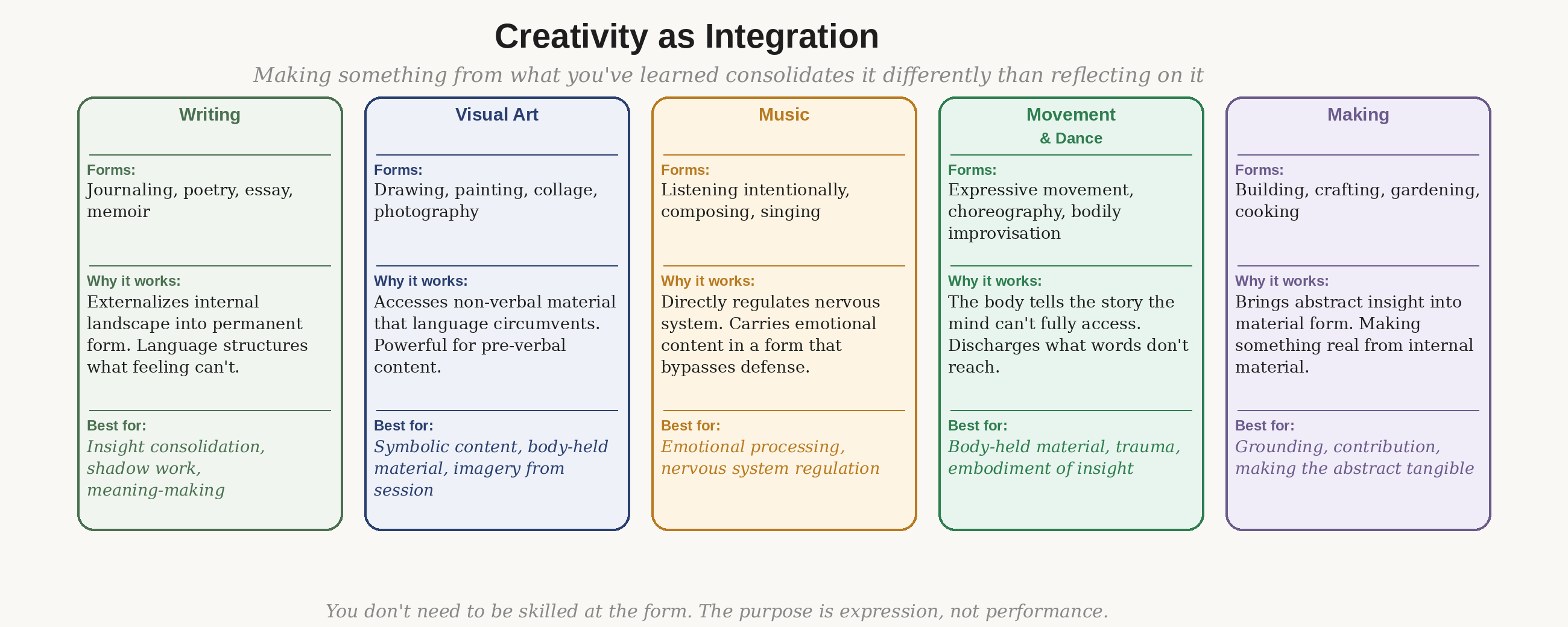
Figure 3: Five forms of creative practice — writing, visual art, music, movement, making. Skill is not the point. Expression is.
One of the most common integration failures is not having a support system mapped before it's needed. When destabilization arrives, or regression hits, or the second valley feels permanent — that's not the moment to be figuring out who to call. The mapping needs to happen in advance, when you're in a stable enough place to think clearly.
The four quadrants of the support system map cover the full range of situations integration produces, from crisis (which requires immediate clinical response) through ordinary connection (which requires no clinical anything, only human presence). Most of the time you will be in the lower quadrants. The upper quadrants need to exist and be known before you need them.
Building the map before you need it
The practical task: before your retreat, or in the first week after, identify a specific name for each category. Not a general category — a specific person or resource. The integration therapist who has availability within 48 hours if something difficult surfaces. The peer support line you've tested and know how to reach. The trusted friend you can call when you need presence without explanation. The alumni network or integration circle you'll participate in monthly.
A support system that exists only as a list of possibilities is not actually a support system. A support system is a set of relationships that are already established — where the person knows you, or where the resource has been contacted and understands your situation. Build these before you need them. They are part of your preparation, as much as anything in Module 3.
Integration as Ongoing Orientation
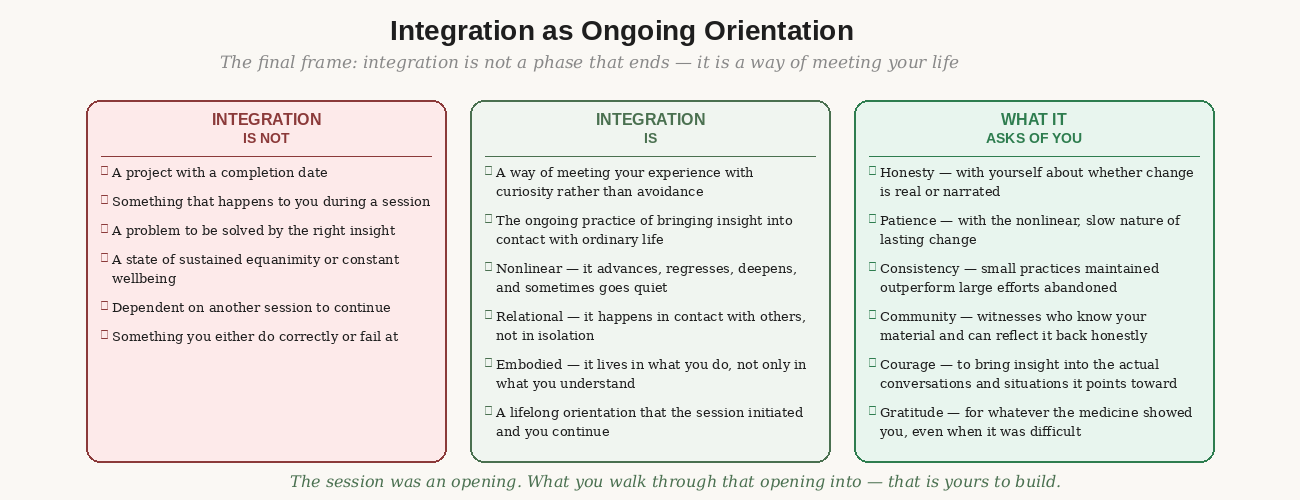
Figure 4: What integration is not, what it is, and what it asks of you going forward.
The most important thing this final module can offer is a frame that will hold the integration work beyond the year this course covers. Because the work doesn't end at month twelve. It doesn't end when you feel better. It doesn't end when you've done all the exercises and built all the practices. The work is ongoing because the orientation it cultivates — curiosity rather than avoidance, presence rather than management, honesty rather than performance — is a lifetime's practice.
This is not a burden. It is a description of what it means to live with intention. Every person doing this work — with or without psychedelics — is engaged in the same fundamental project: becoming more fully themselves, in more honest relationship with others, in more useful service to something beyond their own comfort. Psychedelic experiences can initiate or accelerate that project. They don't complete it.
What integration is not
A project with a completion date. Integration is not something you finish and then return to ordinary life unchanged. The integration is the change; it doesn't conclude when the practices stop. It evolves, deepens, sometimes goes quiet, and continues.
A state of sustained equanimity. The goal of integration is not to arrive at a permanent state of elevated consciousness or unbroken calm. It is to develop a more flexible, more honest, more resourced relationship with the full range of human experience — including difficulty, confusion, grief, and regression. That relationship develops over time through the practices, not through achieving a fixed state.
Something that happens to you. The session happened to you. Integration is what you do with what happened. This is the most important distinction in the entire course: the medicine produces the experience; you produce the integration. The session is not the therapeutic agent. Your sustained engagement with what it showed you is.
What integration asks
Honesty, first. Not performed honesty — actual accounting. The willingness to ask, regularly and without flinching: what has actually changed? Not what do I understand better. What am I doing differently?
Patience, second. With the nonlinear, frustratingly slow nature of lasting psychological change. The insight arrives quickly. The embodiment takes years. Both are real; both matter; only one is durable.
Courage, third. To bring the insight into the actual conversations and situations it points toward. The session showed you something. The integration is walking that something into ordinary life — into the relationship that needs repair, the habit that needs to change, the work that needs to shift. That walk is uncomfortable. It is also what makes the session matter.
The hardest thing this final module asks is not the personal protocol or the letter to self.
It is accepting that the course ends here but the work continues without a course to structure it. That the practices and reviews and monthly maps are now yours to maintain — not because a module told you to, but because you've understood what they're for and chosen to continue them.
The support structures this course provided are temporary scaffolding. The integration practice they've been building is permanent architecture. The question this module is really asking is: can you continue without the scaffold?
The answer is yes. You have everything you need. The practices are simple. The support system exists. The protocol you're about to write is the map. What happens next is yours to determine.
Your Personal Integration Protocol
Time required: 90–120 minutes in one sitting.
When: After completing all twelve modules, ideally in the second or third week after your session.
Format: A dedicated document or journal section — something you will return to.
This is a living document. Update it at months 3, 6, and 12. Each version is a record of where the integration was at that point.
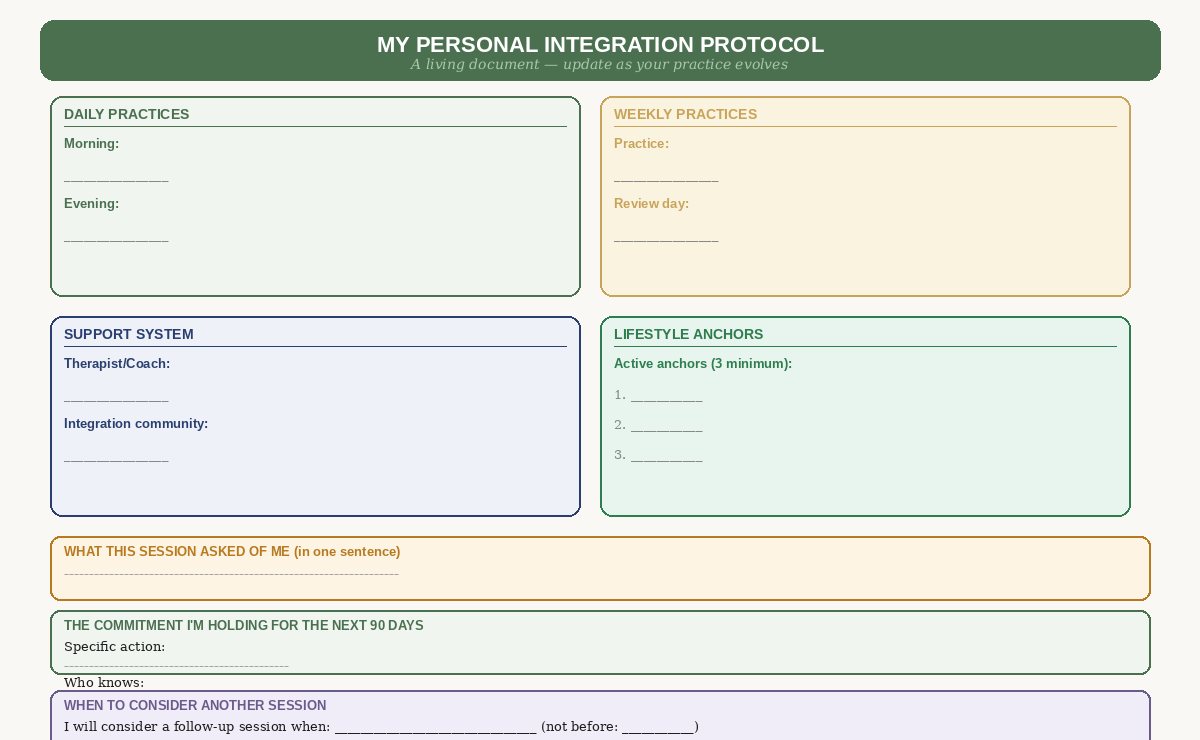
Figure 5: The one-page synthesis — daily practices, weekly practices, support system, lifestyle anchors, and 90-day commitment.
The personal integration protocol is not a template to fill in. It is a document you build from everything in this course, personalised to your specific situation, medicine, material, and life circumstances. Use the following sections as prompts. Write in your own voice, with specific detail. The more specific, the more useful.
Section 1: What this session asked of me
In one sentence — not a paragraph, not a list — what is the most essential thing the session pointed toward? This is the distillation of your working intention, the material that arose, and the inquiry practice you've completed. It should feel slightly uncomfortable to write, because if it's honest, it is pointing at something you haven't fully done yet.
Section 2: My daily practice
The specific practices you will do every day. Not aspirationally — actually. At what time? For how long? What will you do immediately before that makes it more likely to happen? What will you do when you miss a day, to return without drama?
Write this as a commitment, not a plan. "I will do the somatic check-in every morning before checking my phone, for five minutes, for the next thirty days" is a commitment. "I plan to meditate daily" is an aspiration.
Section 3: My weekly practices
The practices that happen less frequently but with consistent regularity. The weekly integration journal review. The therapy or coaching session. The integration circle if you attend one. Write specific days and times — not "weekly" but "Sunday evenings at 8pm."
Section 4: My support system — named specifically
- Integration therapist or coach: [name, how to reach, frequency]
- Peer support for difficult moments: [Fireside Project / Zendo / specific person]
- Integration community: [alumni network / integration circle / specific group]
- Trusted witness: [name — the person who knows your material and can reflect it back]
- Ordinary connection: [people who provide presence without needing to know the full context]
Section 5: My lifestyle anchors — active and committed
Of the six anchors from Module 11, which three are you most committed to maintaining? Write them specifically, with the form they take in your life.
- Anchor 1: [what it is, how often, what it looks like specifically]
- Anchor 2: [what it is, how often, what it looks like specifically]
- Anchor 3: [what it is, how often, what it looks like specifically]
Section 6: Regression and bypass checks
How will you know if you're in regression? What specific patterns returning would signal it? Write two or three specific behavioral markers.
How will you know if you're in bypass? What specifically would that look like for you — given what you know about your own patterns? Write one or two specific scenarios.
When either of these is visible: what is the first thing you will do? Name it specifically.
Section 7: When to consider another session
This section prevents the most common trap: scheduling another session before integrating the current one. Write your own criteria for when a follow-up session would be appropriate. Include: a minimum time requirement; an integration milestone that would need to be reached; and a person whose input you'll seek before deciding.
Example: "I will not consider another session until: at least 6 months have passed; I can identify 3 specific behavioral changes from this session that are now habitual; and my integration therapist agrees that the integration is sufficiently complete."
A Letter to Yourself
Time required: 60–90 minutes.
When: After completing the personal protocol. This is the last exercise in the course.
Instructions: Write this letter by hand if possible. Seal it in an envelope dated for six months from now. Give it to a trusted person to hold, or put it somewhere you will find it.
Do not read it until the date on the envelope.
This letter is perhaps the most important thing this course asks you to do. In six months, you will be a different version of yourself — shaped by whatever the integration period has produced, by whatever regression and progress and ordinary life has brought. The person you are right now, with the clarity that comes from having done this preparation and integration work, has something to say to that future version. Write it.
Do not write what you think you should write. Write what is actually true — what you know, what you're afraid of, what you're hoping for, what you're committed to. This is a private document between you and yourself. There is no one to perform for.
Prompts to guide you — not to constrain you
Begin wherever feels true. These prompts are offered as starting places, not as a structure to follow:
- What do you know right now that you're afraid you'll forget? What clarity feels most important to preserve?
- What are you most committed to, today, that you want your six-month self to have held? What promise are you making to yourself?
- What do you most want your six-month self to remember about why you did this — what brought you here, what mattered, what the medicine showed you?
- If the integration has gone well when you read this: what will you celebrate? What will you be proud of?
- If the integration has been harder than expected when you read this: what do you want to say to yourself? What does your current clarity offer to your future difficulty?
- What question do you want to have answered by the time you read this? What do you want to have tried, changed, built, or let go of?
- What would you tell yourself about what actually matters — not what you think matters, but what you've learned matters?
End the letter with the date. Sign your name. Seal it. Set a reminder in your calendar for six months from today: "Open the letter."
To the person reading this six months from now:
You did something significant. You took preparation seriously. You invested in the integration. You built a practice and a support system and a protocol. Whether the six months since look like you hoped or not — you did the work that was available to you.
Whatever the medicine showed you is still true. Whatever it asked of you is still asking. The clarity you had at the beginning of this letter is still available — it has not gone anywhere, it has only become quieter as ordinary life has moved through.
You are not behind. You are not failing. You are integrating — which is to say, you are alive, changing, in contact with what matters, and doing your best with what you have.
That is enough.
Final Integration Checkpoint
This is the last checkpoint. It is not asking whether you've done the exercises correctly. It is asking whether you're ready to carry this forward without the course to structure it.
- Do you have a written personal integration protocol? Is it specific enough to be useful when you're in regression or confusion — not general enough to mean anything?
- Have you written the letter to yourself? Have you dated it, sealed it, and put it somewhere you will find it in six months?
- Is your support system fully mapped with specific names? Have you contacted each person or resource and confirmed they know you?
- Do you have a monthly review date in your calendar for the next twelve months?
- What is the one thing from this entire course that you are most likely to let slide — and what are you going to do to protect it?
Closing — From the Course
You came here because something brought you to the threshold of this kind of work. Whatever that was — years of difficulty, a sense that something important was possible, a specific wound you've been carrying, or simply a readiness you felt in your bones — it was enough to bring you through twelve modules of serious preparation and integration work.
That readiness — the willingness to take this seriously, to do the exercises when they were uncomfortable, to look at the shadow material, to sit with the long arc rather than declaring it done — is the most important thing you brought to this process. The medicine doesn't provide that. No course provides it. It was already in you.
What the medicine can do — and what this course has tried to help you make use of — is open a window. A window in which the patterns that have organized your life become more visible, more workable, more clearly yours to choose rather than yours to be governed by. The window closes. But what you see through it while it's open, and what you build from what you saw — that stays.
The integration is yours now. The practices are built. The support system exists. The protocol is written. The letter is sealed.
Go live with what you learned.
Course-Wide Resources
The essential reading list
How to Change Your Mind — Michael Pollan. The accessible entry point to the contemporary psychedelic renaissance.
The Body Keeps the Score — Bessel van der Kolk. The foundational text on trauma and the body — essential for Modules 4, 9, and the integration sequence.
No Bad Parts — Richard Schwartz. The accessible IFS guide — essential for Module 8 and ongoing integration work.
Waking the Tiger — Peter Levine. The foundational Somatic Experiencing text — essential for Module 9.
Atomic Habits — James Clear. The most practical guide to building the behavioral anchors that consolidate integration — essential for Module 11.
The essential support organizations
MAPS (maps.org) — Multidisciplinary Association for Psychedelic Studies. Therapist directory, preparation materials, advocacy.
Psychedelic Support (psychedelic.support) — Integration therapist directory with psychedelic literacy filter.
Fireside Project (firesideproject.org) — 24/7 psychedelic peer support line. Call or text 62-FIRESIDE.
Spiritual Emergence Network (spiritualemergence.org) — Clinical support directory for spiritual emergency.
IFS Institute (ifs-institute.com) — Therapist directory for IFS-trained integration support.
Zendo Project (zendoproject.org) — Peer support and harm reduction resources.
Nectara (nectara.com) — Integration coaching platform with retreat center partnerships.
A final note
This course was written with the belief that people who approach psychedelic experiences with genuine preparation and sustained integration work can access something genuinely valuable — and that the resources to do that well have been scattered, incomplete, and often inaccessible. The Inner Compass Course exists to change that.
If this work has been useful to you, consider contributing to the organizations that make psychedelic therapy research and access possible: MAPS, the Beckley Foundation, and the Heroic Hearts Project, which serves veterans specifically.
And if you know someone standing at this threshold — uncertain, under-prepared, or carrying more than they know how to take in — share this resource with them. The preparation matters. The integration matters. The work matters.
mindsawaken.com | Thank you for doing this work.