Setting Your Intention
- Understand why intention matters mechanistically — not as a spiritual ritual but as a neurological primer that shapes what the heightened plasticity window attends to.
- Clearly distinguish between goals, intentions, and outcomes — and why conflating them creates performance anxiety and disappointment.
- Know the common intention-setting mistakes and how to recognize them in your own thinking.
- Have a working intention — written, held lightly, and ready to carry into Module 3 and beyond.
- Be able to use the 'I don't know what I need' position productively rather than treating it as a failure of preparation.
Opening
Most people spend more time researching which retreat center to book than thinking about what they actually want to happen. The booking decision is concrete and satisfying — you compare programs, read reviews, compare prices, make a choice. Intention is less satisfying to work on because it requires sitting with uncertainty and being honest about things you may have been avoiding.
There is a version of intention-setting that is basically wishful thinking dressed up in therapeutic language. 'I want to heal my relationship with my father.' 'I want to be free of depression.' 'I want to understand my purpose.' These aren't intentions — they're outcomes, stated as demands. They carry the implicit assumption that the medicine will deliver what you've ordered. When it doesn't — and it rarely delivers in the way you expect — the result is confusion, disappointment, or a sense that the experience 'didn't work.'
Real intention is something different. It's an orientation rather than a destination. It's the honest question you bring to the threshold — not 'fix this for me' but 'I want to understand this.' The distinction sounds subtle. Experientially, it's the difference between a session that feels productive and one that feels like it failed to deliver. Your intention doesn't control what arises — the medicine will find its own work — but it does prime what you bring attention to and provides an anchor when the experience gets difficult.
This module will help you build that anchor. It will also push back on some of the things people commonly set as intentions that don't serve them. Do the exercises. Write things down. Your working intention should feel slightly uncomfortable — honest enough to be real, open enough not to be a demand.
Why Intention Matters Mechanistically
The therapeutic benefit of psychedelic sessions doesn't come from the altered state alone. Research consistently shows that the same compound, in the same dose, produces dramatically different outcomes depending on set and setting — the mindset and the context. Intention is the most important part of the mindset you bring.
Here's why this is more than spiritual talk. Psychedelics — particularly serotonergic psychedelics like psilocybin and DMT — temporarily suppress activity in the Default Mode Network (DMN), the set of brain regions associated with self-referential thought, autobiographical memory, and the maintenance of habitual ways of seeing. This creates what researchers call a 'period of increased neuroplasticity': the brain's patterns of connection become temporarily more fluid.
What primes which patterns become salient during this window? Your recent experience, your emotional state, and — critically — the intentions and questions you have been sitting with in the days and weeks before. Neuroscientists call this 'predictive coding': the brain devotes attention and processing resources to what it has been primed to attend to. Your intention literally shapes the landscape the medicine explores.
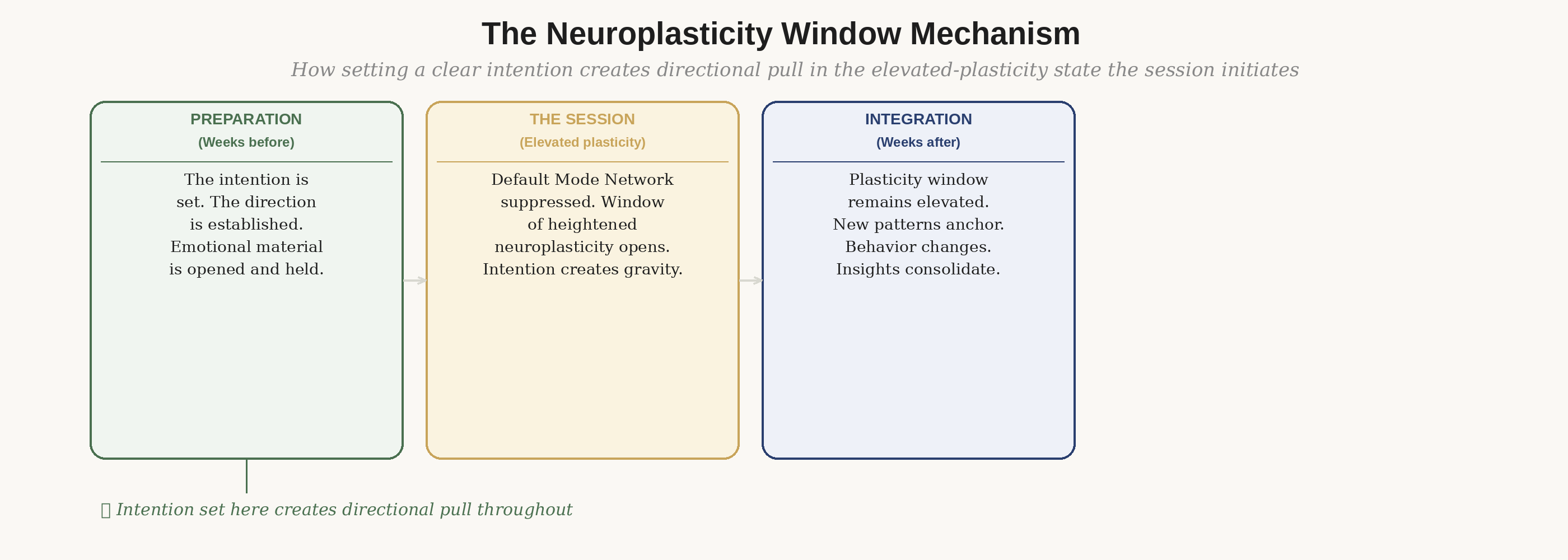
Figure 1: The neuroplasticity window. Intention set in preparation creates the anchor that the elevated-plasticity state amplifies.
This is also why preparation — the week before your session — matters more than most people realize. Not the dietary protocol (that's Module 3), but the psychological preparation: sitting with your intention, journaling about it, letting it surface during meditation or quiet time. You are priming the system. You are telling the brain what to look for.
Integration works by the same mechanism in reverse. The heightened plasticity window extends beyond the session itself — it remains elevated for days and possibly weeks. During this period, new patterns of thinking and behaving are more likely to be consolidated. If you have a clear intention going in, the integration period is anchored to a question: 'What did the medicine show me about this?' Without that anchor, the material can feel diffuse and hard to work with.
Goals, Intentions, and Outcomes: Why the Difference Matters
These three concepts get conflated constantly, including by well-meaning facilitators and retreat programs. Understanding the distinction isn't semantic pedantry — it's the difference between showing up in a useful psychological posture and showing up in one that creates suffering.
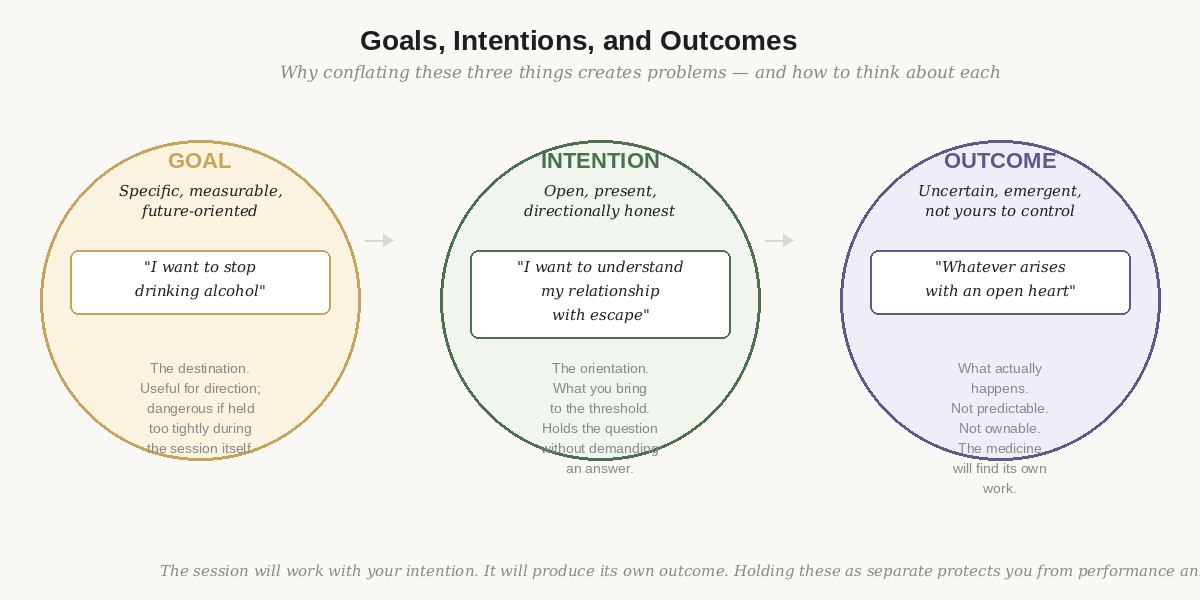
Figure 2: Goals are destinations; intentions are orientations; outcomes are not yours to control. Conflating them causes session disappointment.
Goals: The Destination
A goal is a specific, measurable, future-oriented outcome you want to achieve. 'I want to stop drinking.' 'I want to feel less depressed.' 'I want to repair my relationship with my son.' Goals are useful in life — they give direction. In the context of a psychedelic session, they become problematic when they operate as demands: a specific outcome you expect the medicine to deliver by the end of the day.
The medicine doesn't work that way. It doesn't take your list of desired outputs and efficiently process them. It surfaces what's actually there — which may or may not be the thing you identified as the goal. People seeking resolution with a parent often find the session goes somewhere completely different — an earlier trauma, a belief about their own worth, a pattern in all their relationships. This isn't failure. The medicine found something more primary. But if you arrived with a goal and are evaluating the session based on whether that goal was delivered, you'll almost certainly feel disappointed.
Intentions: The Orientation
An intention is an honest, open question or direction you bring to the threshold. 'I want to understand what drives my need for control.' 'I want to see my relationship with my father from a different angle.' 'I want to understand the fear I carry around connection.'
Notice what these have in common: they are directionally honest (pointing at something real), present-tense (not demanding a future outcome), and open (not prescribing what the understanding should look like). A good intention creates gravity — it gives the medicine a direction to pull toward — without becoming a cage that traps the session in a predetermined narrative.
The working intention you arrive with doesn't have to be perfectly articulated. 'I don't know what's beneath the numbness I've been feeling for five years, and I want to find out' is a perfectly workable intention. 'I want to be happy' is not — it's too abstract to create gravity and too vague to anchor you when things get difficult.
Outcomes: Not Yours to Control
The outcome is what actually happens — and it is, in the most real sense, not yours to determine. The medicine will find its own work. Sometimes that aligns with your intention. Often it finds something adjacent — something more primary, more protected, more charged. Occasionally it goes somewhere completely unexpected.
Your relationship with outcomes before the session should be something like: 'I have an intention that points toward what I want to explore. I trust that what arises is what needs to arise. I am not responsible for producing a particular result.'
This sounds simple. Holding it under the weight of an intense experience, when what you're experiencing isn't what you expected, is much harder. The preparation work of separating these three things in advance makes that easier when the session is actually happening.
The Intention Spectrum
If goals are too specific and 'whatever happens' is too vague, where is the useful middle ground? The answer involves a concept practitioners call 'directional honesty' — an intention that tells the truth about what you're actually carrying, without prescribing what the medicine should do with it.
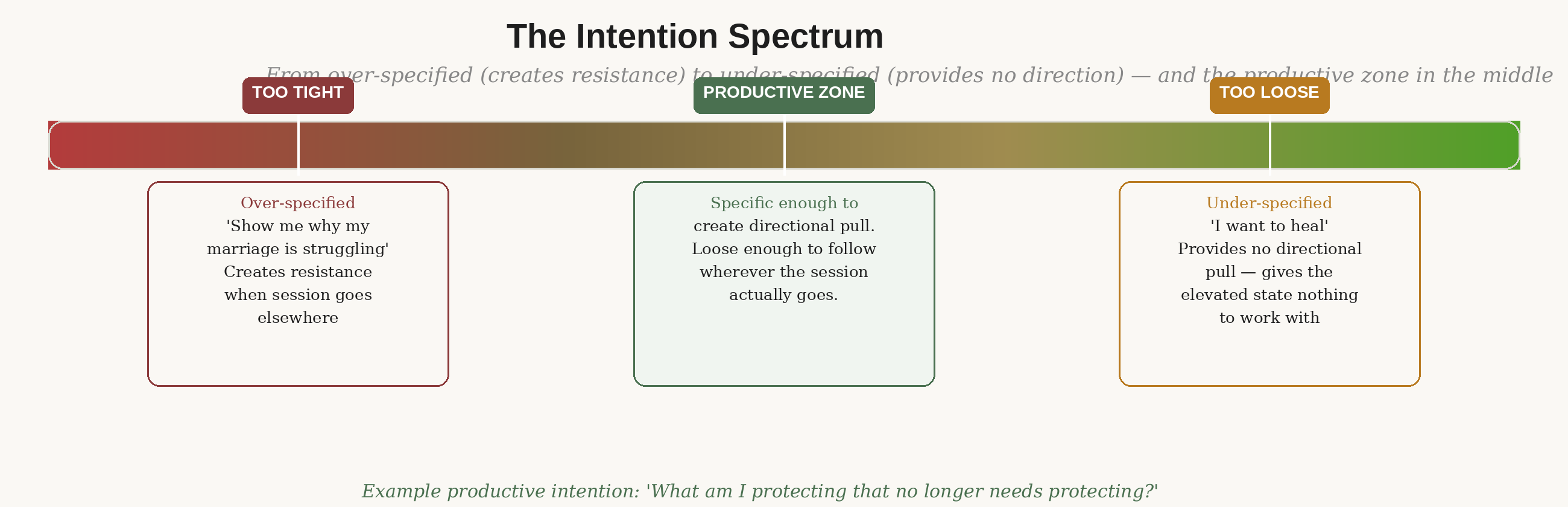
Figure 3: The sweet spot is directionally honest — pointing at something real without demanding a specific resolution.
Too Specific (The Performance Trap)
'I want to resolve my childhood trauma around abandonment in this session.' 'I need to understand whether I should leave my marriage.' 'I want to feel unconditional love today.'
These intentions carry an implicit evaluation: did the session deliver this specific thing? When it doesn't — and it rarely delivers according to specifications — the session gets labeled as unsuccessful, which is almost always inaccurate. More importantly, holding a specific expectation creates performance anxiety that actively interferes with the session. Part of you will be monitoring whether the medicine is doing the right thing, rather than simply being present with what arises. This monitoring is exactly the Default Mode Network activity that the medicine is trying to quiet.
Too Vague (The Unanchored Trap)
'I just want to see what happens.' 'I'm open to whatever the medicine brings.' 'I want to connect with my higher self.'
There is a version of this that is genuine — a deep readiness for whatever arises, free of agenda. That is a good destination. It is not usually where people actually are when they say it. More often, 'I don't know what I intend' is a way of avoiding the uncomfortable work of getting honest. What are you actually carrying? What has brought you to this point? What do you want to understand?
The other problem with vague intentions: they provide no anchor. When an experience becomes difficult — and difficult experiences are common — you need something to return to. 'Why am I here? What am I trying to understand?' A clear intention can answer that. 'I'm open to whatever comes' cannot.
The Sweet Spot: Directionally Honest
What makes an intention work:
It names something real. It points at an actual area of your life — a pattern, a wound, a question — rather than a desired state.
It's a direction, not a destination. 'I want to understand my relationship with anger' not 'I want to stop being angry.'
It leaves room. The phrasing opens a question rather than closing with an expected answer.
It feels slightly uncomfortable to say out loud. If your intention is easy and comfortable, it probably isn't honest enough.
Common Intention Mistakes
Bypass Intentions
Bypass intentions point toward a desired state while avoiding the difficult material that would need to be worked through to get there. 'I want to feel more peace.' 'I want to love myself.' 'I want to feel connected to something larger.'
These aren't dishonest — but they skip a step. If you want more peace, what is the absence of peace? Where does the agitation live? What is it protecting? An intention that names the obstruction rather than the desired resolution tends to be more productive: 'I want to understand what I'm afraid of when I slow down' gets closer to the actual terrain than 'I want more peace.'
The concept of spiritual bypass — using spiritual practice to avoid rather than engage with difficult psychological material — applies directly to intention-setting. If your intention is primarily about transcending difficult material rather than meeting it, the medicine will often route around the bypass and surface exactly what you were hoping to avoid. Setting an honest intention that faces this directly is better preparation.
The Productivity Trap
'I want to get a lot done in this session.' 'I want to work through as much as possible.' 'I need to maximize the therapeutic value.'
This is a particularly common pattern for high-achieving, goal-oriented people who approach everything as a project to be optimized. A psychedelic session is not a project. It cannot be optimized. Bringing an optimizing orientation to it tends to produce cognitive anxiety during the session — the part of you that's monitoring for productivity is exactly the part that needs to quiet for the work to happen.
One session of genuine depth is worth more than three sessions of efficient processing. If your intention is to 'get a lot done,' that's worth examining: what does the urgency come from? Why does depth need to happen quickly?
The Borrowed Intention
'I want to experience unconditional love the way my friend did.' 'I want to have a mystical experience.' 'I want to see what the researchers describe as ego dissolution.'
These intentions are borrowed from someone else's account. They make someone else's experience the template for what success looks like. The medicine will not deliver your friend's experience. It will deliver yours — which may be quieter, more uncomfortable, more confusing, or organized around completely different material. An intention oriented around replicating another person's experience will almost certainly produce disappointment.
Working With 'I Don't Know What I Need'
This deserves its own section because it's genuinely common and genuinely useful when handled correctly. Many people arrive at this process with a sense that something is wrong or incomplete but without the ability to name it clearly. Depression without an identifiable cause. Persistent numbness. A feeling of being slightly outside their own life. Disconnection without an obvious source.
'I don't know what I need' is a valid starting place — as long as you don't leave it there. The work of this module is to sit with that not-knowing and let it become more specific. What does the not-knowing feel like in your body? When did it start, or when did you first notice it? What situations amplify it? What are you doing when you feel most distant from it?
Often, the intention that emerges from careful engagement with 'I don't know' is something like: 'I want to understand what's beneath the numbness I've been carrying for six years.' That is a real intention. It names something — the numbness, the duration — and leaves the discovery open. It can anchor a session productively.
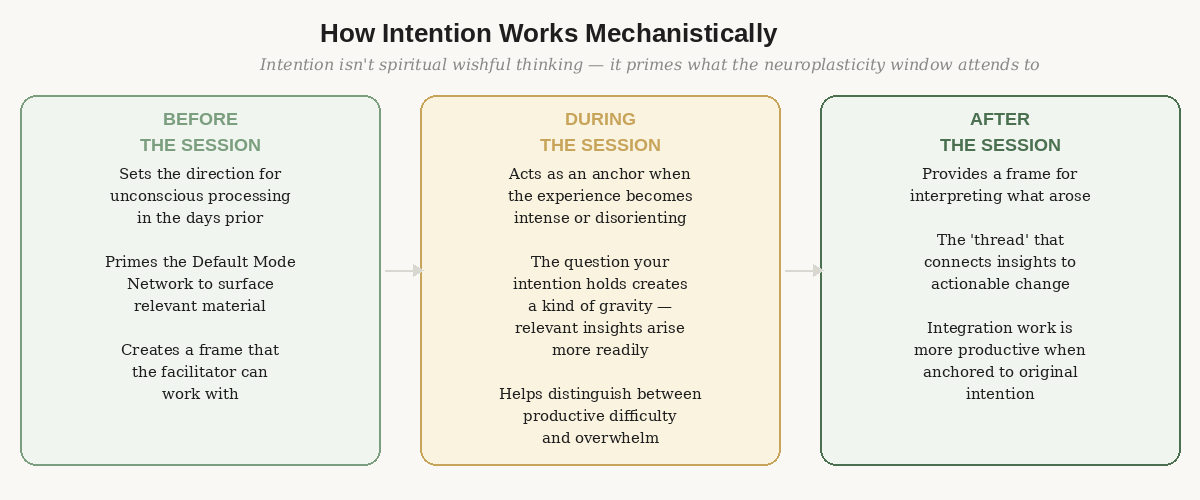
Figure 4: Intention is not a spiritual ritual — it is a priming mechanism that shapes what the plasticity window attends to.
The Intention-Setting Process
Setting a working intention is not a one-time event. It's a process that typically takes a week or more and involves returning to the same question from different angles until something honest and useful emerges. The following process is drawn from preparation frameworks used at Synthesis Institute and MAPS, adapted for the retreat context.
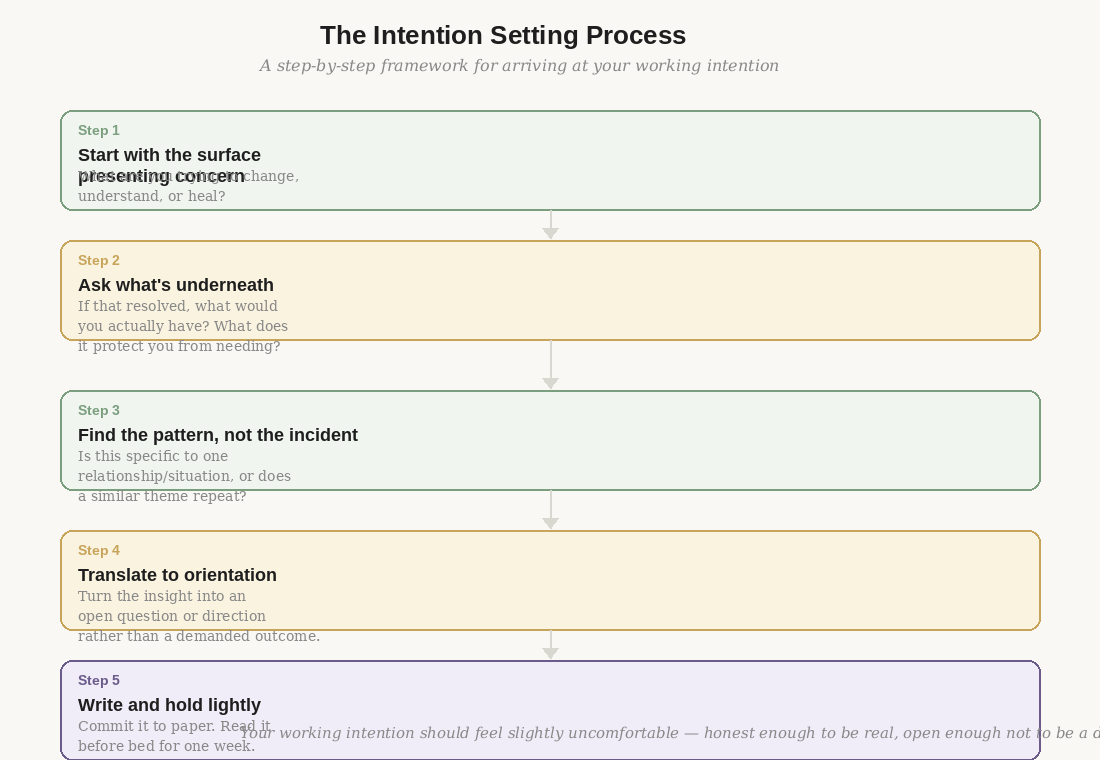
Figure 5: A five-step process from surface concern to working intention. Most people stop at step 1.
Step 1: Start with the surface presenting concern
What are you trying to change, understand, or heal? Don't edit this yet — just let it be whatever it is. Write it down. 'I'm exhausted and don't know why.' 'My relationship feels hollow.' 'I can't stop drinking even though I want to.' 'I've been depressed for three years and nothing has worked.'
Step 2: Ask what's underneath
For each surface concern, ask: if this resolved, what would you actually have? What does it protect you from needing to confront? A drinking pattern often protects against anxiety or grief. A hollow relationship often points toward unexpressed needs or unaddressed self-worth material. Exhaustion often sits on top of unexpressed anger or long-term emotional suppression.
You don't need to resolve this in the intention-setting process. You just need to get one layer deeper than the symptom.
Step 3: Find the pattern, not the incident
Is what you've identified specific to one relationship, one period of your life, one situation — or does a similar theme repeat across different contexts? The pattern is almost always where the primary material lives. 'My relationship with my mother' is an incident. 'I abandon my own needs whenever I sense that someone else's disappointment is coming' is a pattern. The second is more useful as an intention because it describes terrain, not a specific location.
Step 4: Translate to orientation
Take the pattern you've identified and translate it into an open question or direction. Not 'I want to stop abandoning my needs' — too prescribed. Not 'I want to understand my abandonment pattern' — slightly better but still cognitive. Try: 'I want to see where the fear of disappointing people actually lives in me, and what it's protecting.'
The test: does your working intention feel honest, slightly uncomfortable, and genuinely open? Or does it feel comfortable, manageable, and slightly distant from what's actually true? If it's the latter, go one layer deeper.
Step 5: Write it and hold it lightly
Write your working intention down — one or two sentences. Read it each morning for the week before your retreat. Let it sit in the background of your days. Notice what comes up when you hold it.
Then, in the final 24 hours before your session, consciously set it down. You've done the priming work. The session will work with what's there. Trying to actively maintain your intention during the peak of the experience is counterproductive — it's the monitoring mind interfering with the process. Set the anchor; then trust it to hold without your constant attention.
The thing people most want to skip in this module is getting honest about what they're actually carrying.
It is much easier to set a comfortable, aspirational intention ('I want to feel more connected to myself') than to sit with the question of what specifically is in the way of that connection, why it's been in the way for as long as it has, and what it would cost to actually look at it directly.
The medicine will find what's there regardless of whether your stated intention names it. The question is whether you arrive with enough honesty to recognize what arises as relevant — or whether you spend the session confused about why it's bringing up something you didn't ask about.
The most productive intentions feel a little exposing. They name something that you haven't been saying out loud. They point toward material you've been managing rather than meeting. If your intention feels comfortable and safe, ask yourself: what am I not saying?
This isn't about manufacturing difficulty or forcing yourself into darkness. It's about honesty — which is, ultimately, the only thing that makes this work.
Guided Intention-Setting Process
Time required: 60–90 minutes over two or three sessions, spread across at least three days.
Materials: Paper and pen, or a dedicated document you'll keep. Do not do this on your phone.
This exercise is built in stages — don't try to complete it in one sitting. Each stage builds on the previous one, and the most valuable insights tend to arrive in the space between writing sessions, not during them.
Stage 1 — Surface Layer (Day 1, 20 minutes)
Set a timer for 20 minutes. Without stopping to edit or evaluate, write continuously in response to this prompt:
Write until the timer stops. Don't read back what you've written. Set it aside.
Stage 2 — Beneath the Surface (Day 2 or 3, 30 minutes)
Read back what you wrote in Stage 1. Then write in response to these prompts, spending 5–7 minutes on each:
- What would I actually have — in my life, my relationships, my sense of myself — if the thing I described in Stage 1 resolved? What would change?
- What does the thing I'm carrying protect me from? (Be honest: sometimes pain is familiar, sometimes avoidance is comfortable. What does staying in this pattern protect you from needing to face?)
- When did this start, or when did I first notice it clearly? What was happening then?
- Where in my body do I feel this when I pay attention to it right now?
Stage 3 — The Pattern (Day 3 or 4, 20 minutes)
Look at what you've written. Ask:
- Is this specific to one person, relationship, or situation — or does a similar theme appear elsewhere in my life?
- If I named the pattern (not the incident), what would I call it? Write a phrase or sentence.
- Is the pattern I've named one I've recognized before? If so, what have I tried to address it, and what happened?
Stage 4 — Draft Intention (Day 4 or 5, 15 minutes)
Using everything you've written, draft three possible working intentions. Each should:
- Begin with 'I want to understand...' or 'I want to see...' or 'I want to meet...'
- Name something real and specific (not a desired state)
- Be open-ended (no prescribed answer built in)
- Feel slightly uncomfortable to say out loud
Of the three you've drafted, which one feels most honest? Circle or mark it. That is your working intention.
Stage 5 — Working With It (Days 5–14 before your retreat)
Read your working intention each morning. Carry it through your day with a loose awareness. Notice:
- What comes up when you hold this question?
- Where do you feel resistance to it?
- Does anything shift in how you see this material as the days pass?
If a significantly different or more honest intention emerges in this period, update it. Your working intention should be alive, not fixed.
In the 24 hours before your retreat: Write your final working intention on a small piece of paper or card. Read it. Then consciously set it aside. You've done the priming work.
The 'What Would I Need to Believe to Be Ready?' Reflection
Time required: 30–45 minutes. Do this after Exercise 1, once you have a working intention.
Purpose: To surface the beliefs and fears that sit beneath the surface of your intention — and to check whether your readiness is real or performed.
This exercise uses a technique from Acceptance and Commitment Therapy (ACT) — a therapeutic framework developed by Steven Hayes that focuses on psychological flexibility and the relationship between behavior and underlying values. The core ACT insight relevant here is that our actions are often governed by beliefs we've never made explicit, and that making them explicit is the first step to working with them.
Part A — The Belief Inventory
Complete each of these sentence stems in writing. Don't think about them too hard — write the first honest response that comes:
- "I will know this worked if..."
- "I'm afraid that the medicine will show me..."
- "The thing I most don't want to have to look at is..."
- "If I'm honest, I'm hoping the medicine will fix ___ without me having to..."
- "I believe I deserve this kind of healing because..." (If this sentence is hard to complete, that's important information.)
- "I believe this might not work for me because..."
- "The version of myself I'm most afraid of finding in there is..."
Part B — The Belief Examination
Look at what you wrote. For each item, ask: Is this belief I've stated accurate? Is it based on evidence, or is it a fear masquerading as a prediction?
Specifically:
- For 'I will know this worked if...' — Is that criterion actually valid? Would a session that didn't meet this criterion necessarily have failed?
- For 'I'm afraid that the medicine will show me...' — What would it mean if it did? Why is that frightening?
- For 'I believe this might not work for me because...' — Is this based on genuine contraindications or on a deeper fear that you're somehow different from the people the research describes?
Part C — The Readiness Question
Finally, in your own words, complete this:
Write freely. This is not a public statement. It's a private inventory.
Read back what you wrote. Notice: are the beliefs you named things you actually hold, or things you're working toward? There is no wrong answer here — knowing where you actually are is more useful than performing a readiness you haven't arrived at yet.
If there are specific beliefs in your inventory that feel like genuine obstacles — 'I'm afraid the medicine will show me I'm fundamentally broken' — bring these to your pre-retreat preparation call with your facilitator. These are exactly the kind of material that preparation conversations are designed to work with.
- Do you have a written working intention? If not, what's getting in the way of completing Exercise 1?
- Is your working intention directionally honest — does it name something real — or is it still aspirational and comfortable? If the latter, what one layer deeper would it look like?
- Have you identified whether your intention is a goal, an intention, or an outcome wish? If it's still a goal or outcome wish, how would you reframe it as an orientation?
- What belief from Exercise 2 most surprised you or felt most important to sit with?
- Is there anything about your working intention that you haven't told — or wouldn't tell — your facilitator? If so, that's worth examining before Module 5.
Resources
Books
The Happiness Trap — Russ Harris. An accessible introduction to Acceptance and Commitment Therapy, the framework underlying Exercise 2. Understanding ACT's distinction between values and goals is directly useful for intention-setting.
Breath: The New Science of a Lost Art — James Nestor. Tangentially relevant but practically important: breath is the primary tool available during a session, and learning about it during preparation builds the relationship with breathing that Module 6 will require.
Psychedelic Psychotherapy — R. Coleman. The most comprehensive clinical guide to psychedelic-assisted therapy, including preparation frameworks. More technical than most books on this list — worth reading selectively rather than cover to cover.
Research
Carhart-Harris, R. & Friston, K. (2019). REBUS and the Anarchic Brain. Pharmacological Reviews, 71(3), 316–344. The primary scientific paper articulating how psychedelics affect predictive coding and why set matters mechanistically.
Gasser, P. et al. (2014). Safety and Efficacy of Lysergic Acid Diethylamide-Assisted Psychotherapy. Journal of Nervous and Mental Disease. One of the first modern controlled trials, with clear documentation of the role of preparation in outcomes.
Tools
MAPS Preparation Resources (maps.org) — Preparation guides developed for MDMA-assisted therapy clinical trials, adapted for general use. The preparation materials are publicly available.
The Zendo Project (zendoproject.org) — Includes preparation and integration guidance developed from thousands of peer support interactions at major events and retreat settings.